


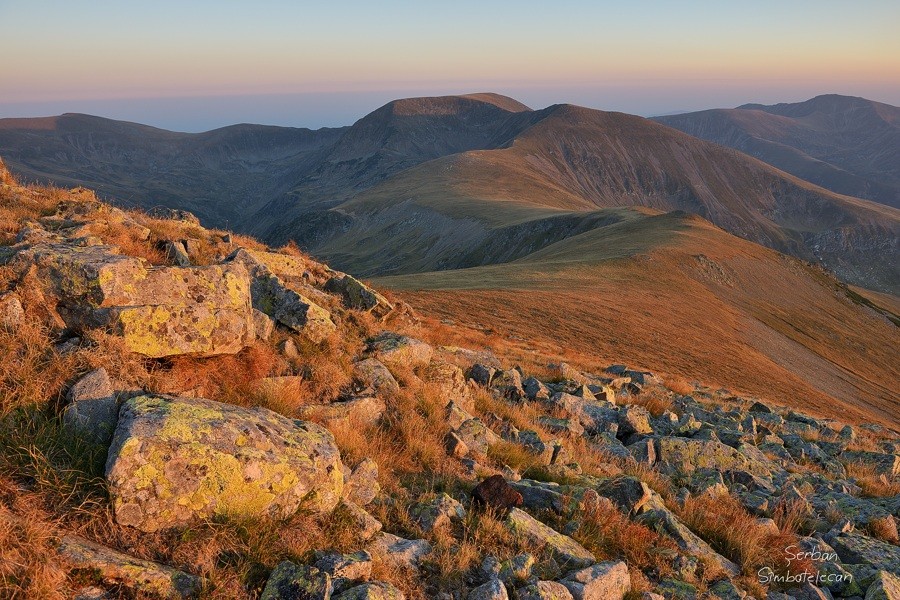
Rising to approximately 2,291 meters in the Godeanu Mountains, near the famous Retezat National Park, this isolated summit has long been associated with unusual atmospheric phenomena, ancient Dacian mythology, and modern paranormal theories.
Often called “the mountain that disappears,” Gugu Peak continues to attract adventurers, researchers, photographers, historians, and tourists fascinated by mysterious places. Although many legends surrounding the mountain have been scientifically analyzed in recent years, the area still preserves an aura of mystery that distinguishes it from any other mountain region in Romania.
The “Disappearing Mountain” Phenomenon
One of the most famous legends connected to Gugu Peak claims that the mountain can suddenly vanish from sight under certain weather conditions. According to local stories passed down through generations, the summit becomes invisible at sunset or during specific atmospheric changes, creating the illusion that the mountain has disappeared completely.
Modern meteorologists and geographers explain this phenomenon through a rare combination of optical refraction, dense air layers, humidity, and intense light reflection. Because the massif has a relatively isolated position and steep slopes, sunlight can create visual distortions, especially during late afternoon and early evening. Clouds, temperature inversions, and fog formations may also contribute to the effect, causing the contours of the peak to blend into the horizon.
Even though science offers rational explanations, the visual impact remains extraordinary for visitors who witness the phenomenon directly.
A Place Associated with Unusual Natural Phenomena
The region surrounding Gugu Peak is also known for reports of strange lights, sudden electrical discharges, and luminous spheres observed during storms. Specialists generally associate these occurrences with rare meteorological events such as ball lightning and intense electromagnetic activity generated by unstable atmospheric conditions in high-altitude environments.
Hikers and campers who spend nights in the area often describe unusual silence, rapidly changing weather, and powerful wind currents that appear unexpectedly around the summit ridge. Because of its remote location and minimal light pollution, the mountain also offers exceptional visibility of the night sky, making it a popular destination for astrophotography and astronomical observation.
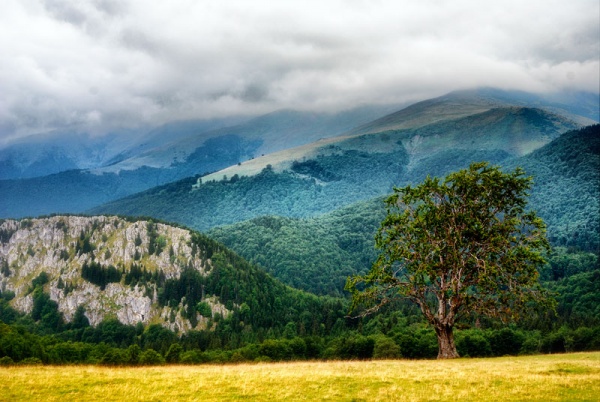
Nearby areas such as Cracul Peșterii are frequently mentioned in local folklore due to optical effects created by sunlight reflections on rock formations and cave openings. These natural effects have contributed to the belief that the region possesses a unique energetic or spiritual character.
The Sacred Mountain of the Dacians
Beyond the natural phenomena, Gugu Peak occupies an important place in Romanian mythology and Dacian legends. Some historians, writers, and folklorists believe that the massif may have been connected to ancient sacred rituals practiced by the Dacians, the ancestors of modern Romanians.
According to popular tradition, the mountain was considered a hidden sanctuary dedicated to Zalmoxis, the supreme spiritual figure of Dacian culture. Legends claim that secret ceremonies and initiations took place in these inaccessible mountains, protected by thick forests and difficult terrain.
Although there is no definitive archaeological evidence proving that Gugu Peak was the exact sacred mountain of the Dacians, the theory continues to inspire historians and mythology enthusiasts. The isolated geography of the region and its dramatic landscape strongly support the symbolic image of a hidden spiritual center.
Stories linked to Decebal, the last king of Dacia, also survive in local folklore. Some legends suggest that treasures from the Dacian Kingdom were hidden somewhere within the Godeanu Mountains before the Roman conquest. For this reason, treasure hunters and explorers still visit the area searching for traces of lost artifacts and ancient tunnels.
Gugu Peak in Modern Culture and Tourism
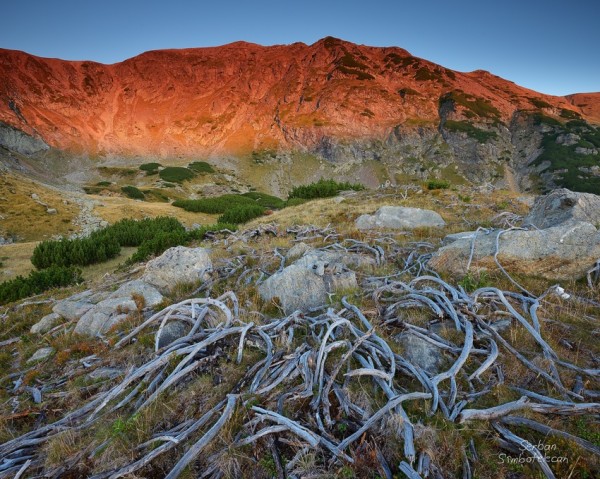
Today, Gugu Peak has become an important attraction for mountain tourism in Romania. The region appeals especially to experienced hikers because the trails are demanding and the weather can change rapidly. The landscape includes alpine meadows, glacial valleys, rocky ridges, and extensive wilderness areas that remain largely untouched.
Unlike heavily commercialized mountain resorts, the Godeanu Mountains preserve an authentic and remote atmosphere. Visitors are encouraged to travel with proper equipment, mountain maps, and experienced guides, particularly during autumn and winter seasons.
In recent years, interest in ecotourism and wilderness exploration has increased significantly in Romania, bringing more attention to lesser-known regions such as the Godeanu massif. Social media, drone photography, and documentary productions have further contributed to the mountain’s growing international reputation.
Researchers today view Gugu Peak not as a supernatural anomaly, but as a remarkable combination of geography, atmospheric science, mythology, and cultural identity. The coexistence of scientific explanations and ancient legends is precisely what continues to make this mountain one of the most intriguing destinations in Eastern Europe.
A Symbol of Mystery in Romania
Whether approached from a scientific, historical, or mythological perspective, Gugu Peak remains one of Romania’s most captivating natural landmarks. Its dramatic scenery, unusual optical effects, and connection to Dacian spirituality have transformed it into a symbol of mystery and exploration.
For many visitors, the true fascination of Gugu Peak does not come from proving legends right or wrong, but from experiencing a rare place where nature, history, and imagination seem to merge into a single unforgettable landscape.





 International editions: