


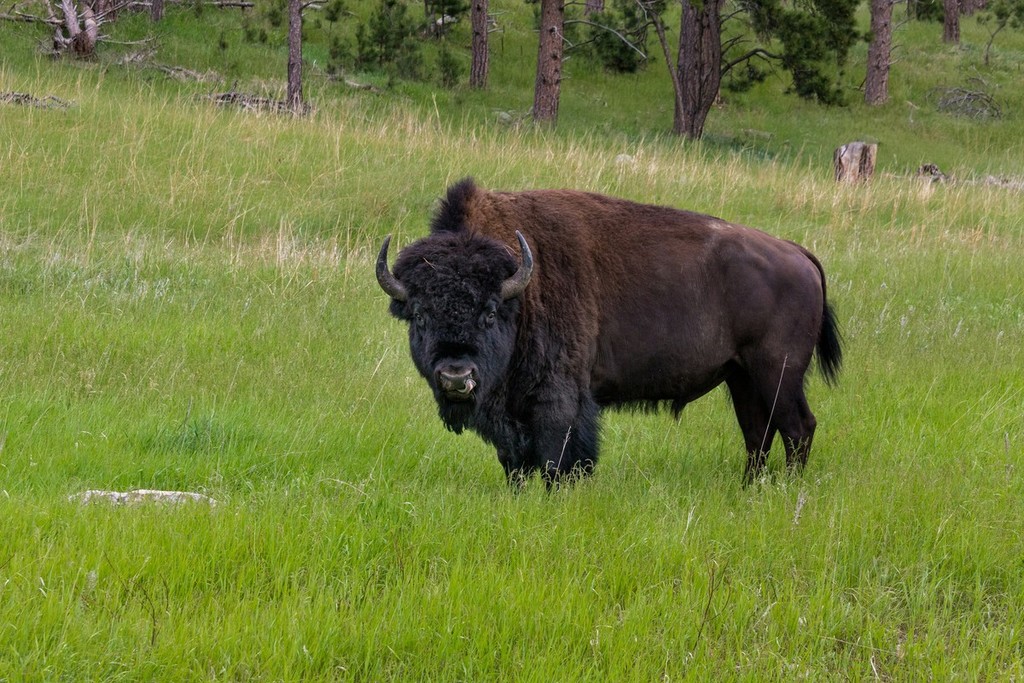
The reserve is recognized as the place where the European bison’s reintroduction to Romania began, making it a landmark for nature conservation and biodiversity protection.
Located on the edge of the Slivuț Forest, the Slivuț–Hațeg Bison Reserve is the first European bison repopulation center in Romania and a popular destination for nature lovers.
The reserve was established in 1958, when Romania brought the first two European bison (Bison bonasus) from Poland—a male and a female. This marked the first step in an ambitious program to reintroduce the species after its disappearance from Romanian territory.
A third bison arrived the following year, and the breeding program quickly proved successful. Soon, the first bison calves of modern Romania were born, marking the beginning of the species’ return to the country’s wildlife.
Over the decades, dozens of bison calves have been born at Slivuț–Hațeg, and many of the animals raised here have contributed to the development of other breeding centers and reserves across Romania.
The reserve covers approximately 50 hectares of forest and grassland in a natural landscape dominated by oak, hornbeam, and other native tree species. Visitors can observe the bison in an environment that closely resembles their natural habitat, using specially designed walking paths and observation points.
The European bison is the largest land mammal in Europe. Adult males can weigh more than 900 kilograms and reach nearly 2 meters in height at the shoulder. Despite their impressive size, bison are generally peaceful and cautious animals, feeding mainly on grasses, leaves, shoots, and tree bark.
In the past, European bison inhabited vast areas across Europe, including what is now Romania. However, excessive hunting and the loss of natural habitats led to their gradual extinction.
The last wild bison in Transylvania was killed around 1790, and the species eventually disappeared entirely from Romania’s fauna. Across Europe, the last wild lowland bison was shot in the Białowieża Forest in 1921, while the last wild Caucasian bison was killed in 1927. At that time, only a few dozen animals survived in captivity.
Thanks to international conservation and breeding programs, the species was saved from extinction. Today, the global population of European bison exceeds 8,000 individuals, most of which live in free-ranging or semi-free-ranging conditions in several European countries.
The Hațeg Reserve played a crucial role in the reintroduction of the European bison to Romania. It became the foundation for later conservation initiatives, including breeding and reintroduction programs in the counties of Neamț, Dâmbovița, Brașov, and Caraș-Severin.
Today, Romania hosts some of Europe’s most important bison rewilding projects. Free-ranging bison populations now live in the Țarcu Mountains and other areas of the Carpathians, helping restore natural ecosystems and supporting the growth of ecotourism.
A visit to the Slivuț–Hațeg Bison Reserve offers a unique opportunity to observe these remarkable animals up close and to learn more about their history, conservation efforts, and the rich biodiversity of the Hațeg region.
Thanks to its location, the reserve can easily be included in a tourist itinerary that also features other major attractions in the area, such as Ulpia Traiana Sarmizegetusa, Densuș Church, and the UNESCO International Geopark of Hațeg Country.
Today, the Slivuț–Hațeg Bison Reserve remains a symbol of the success of Romania’s conservation efforts and one of the few places where visitors can admire Europe’s largest land mammal in an exceptional natural setting.




 International editions: