


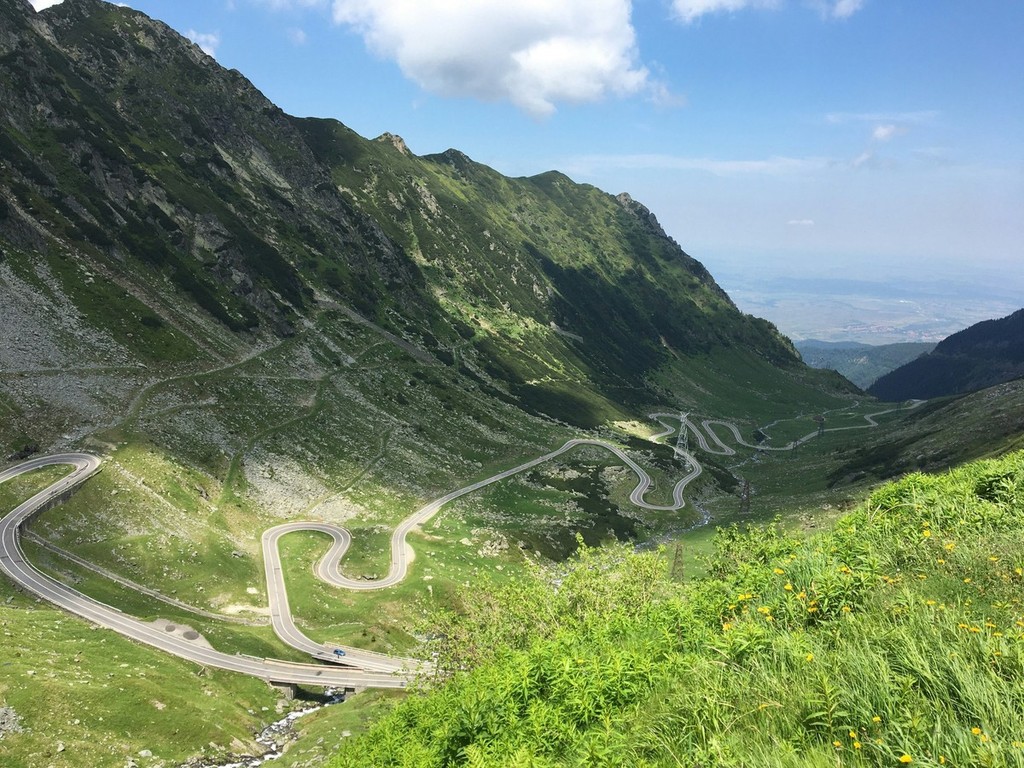
The Transfăgărășan is one of Romania's most impressive engineering achievements and, at the same time, one of the most spectacular mountain roads in the world. Crossing the Făgăraș Mountains, the highest and most massive mountain range in the Southern Carpathians, this road has become over time a symbol of Romanian tourism and a landmark destination for travel enthusiasts, photographers, motorcyclists, and adventure seekers. With a length of approximately 151 kilometres and a maximum altitude of 2,042 metres, the Transfăgărășan connects the south of the country with Transylvania, linking the counties of Argeș and Sibiu through a route that passes through some of the most spectacular natural landscapes in Europe.
The story of the Transfăgărășan's construction is closely linked to the political and military context of the communist era. Following the invasion of Czechoslovakia by Warsaw Pact troops in 1968, Romania's leadership considered it necessary to develop strategic routes that would allow the rapid movement of armed forces between the country's historical regions. Thus emerged the idea of building a road across the Făgăraș Mountains, an impressive natural barrier separating Wallachia from Transylvania. Construction began in 1970 and progressed at a rapid pace under extremely difficult conditions. Thousands of soldiers, engineers, geologists, and workers were mobilised to complete the project. In order to carve the road through the mountain massif, thousands of tonnes of explosives were used, while the steep slopes required complex reinforcement and development works. Officially, construction was completed in 1974, although improvement and expansion works continued in the following years.
The human cost of this construction project remains a sensitive and controversial subject. Official documents from the period mention several dozen fatalities, but many participants and historians believe that the actual number of those who lost their lives during construction was significantly higher. Working conditions at high altitudes, unstable terrain, controlled explosions, and the harsh climate made this one of the most difficult infrastructure projects in Romanian history.
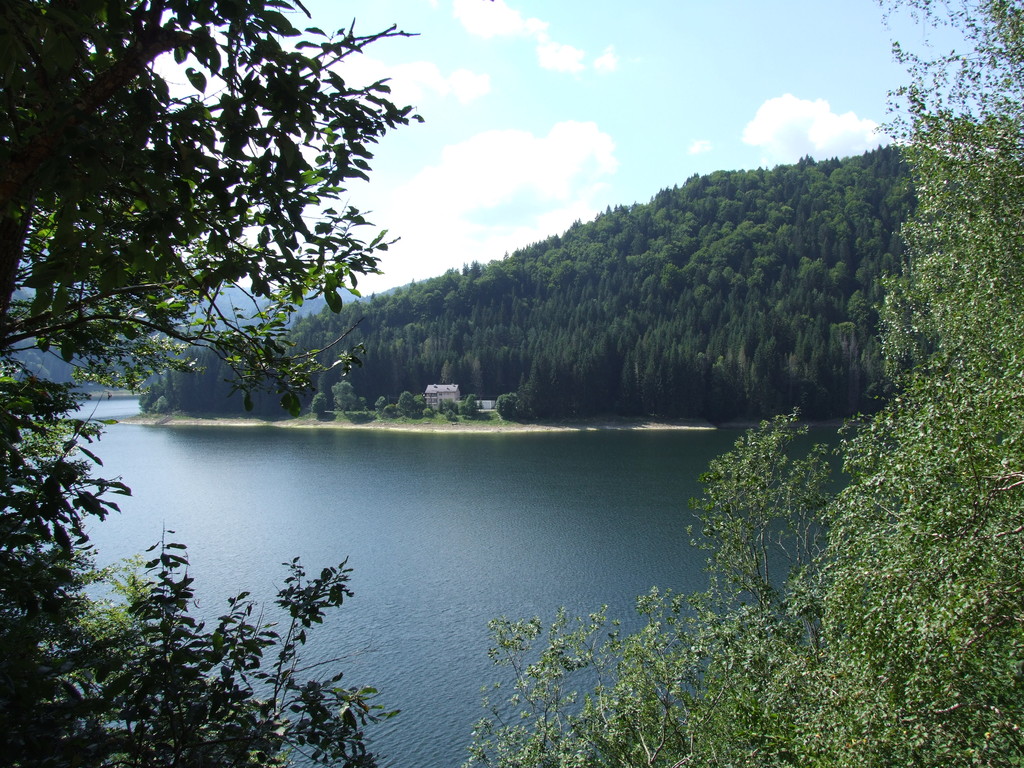
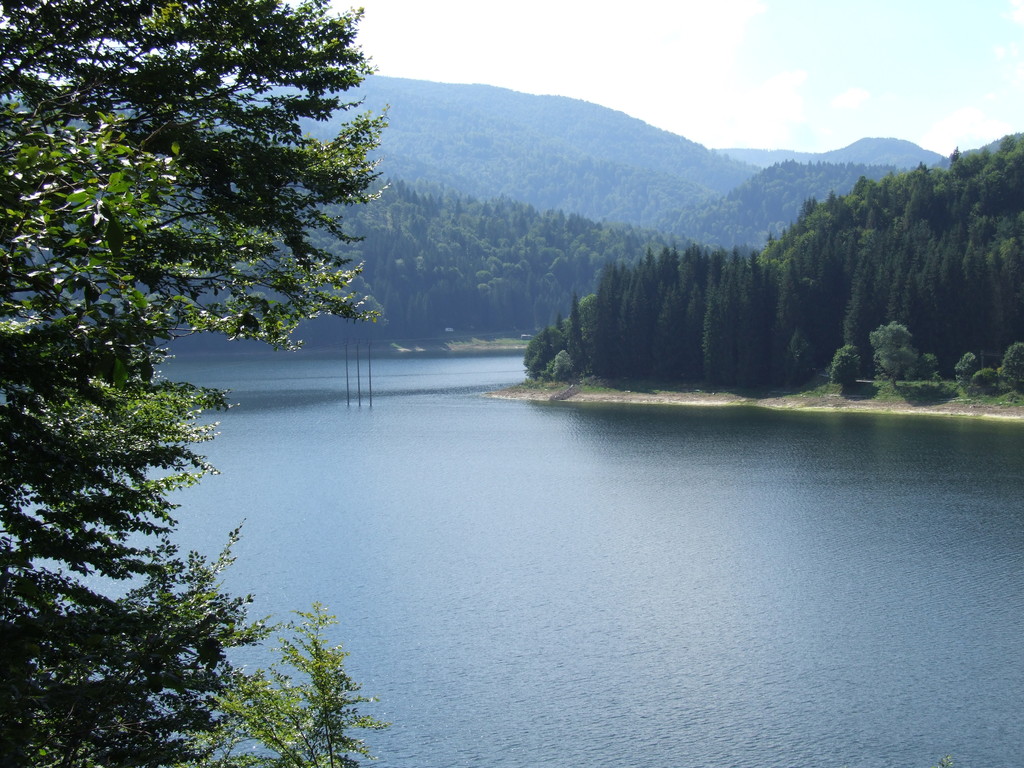
The road begins near the city of Pitești and gradually climbs towards Curtea de Argeș, one of Romania's most important historical and religious centres. From here, the route enters the mountainous area and offers the first spectacular views of the valleys and forests covering the southern slopes of the Făgăraș Mountains. One of the most important attractions along the route is Vidraru Dam, built between 1960 and 1966. Standing 166 metres high, it was, at the time of its inauguration, one of the largest hydroengineering structures in Europe. The reservoir formed behind the dam enhances the landscape with its impressive expanse, surrounded by dense forests and mountain ridges. Nearby stands the statue of Prometheus, a symbol of energy and creative power, located on the slope overlooking the lake.
A short distance from Vidraru lies Poenari Fortress, the true fortress associated with Vlad the Impaler. Situated on a steep and difficult-to-access rocky peak, the fortress once dominated the Argeș Valley and played an important strategic role in defending the region. Reaching its ruins requires climbing hundreds of steps, but the panoramic view of the surrounding area fully rewards the effort.
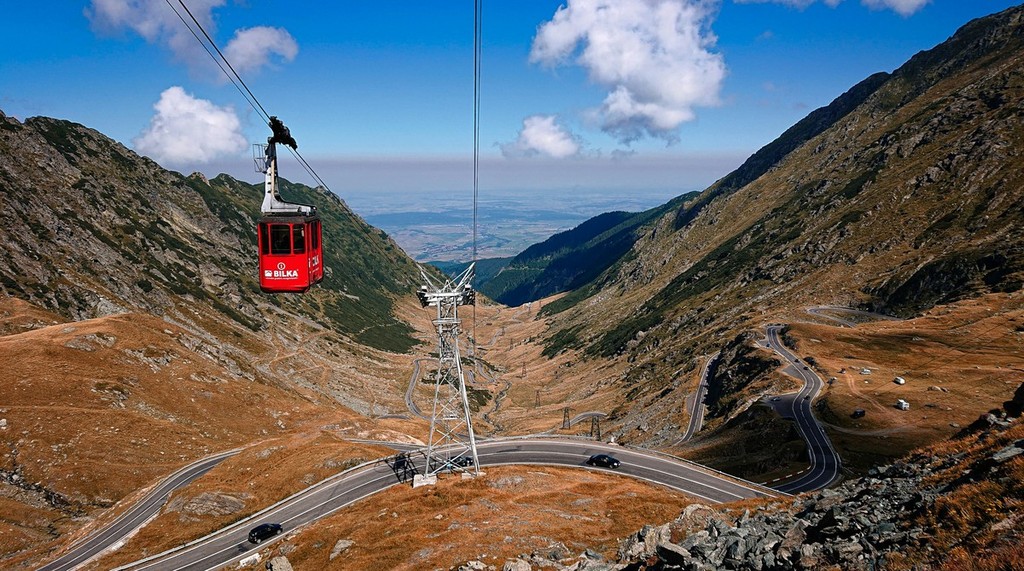
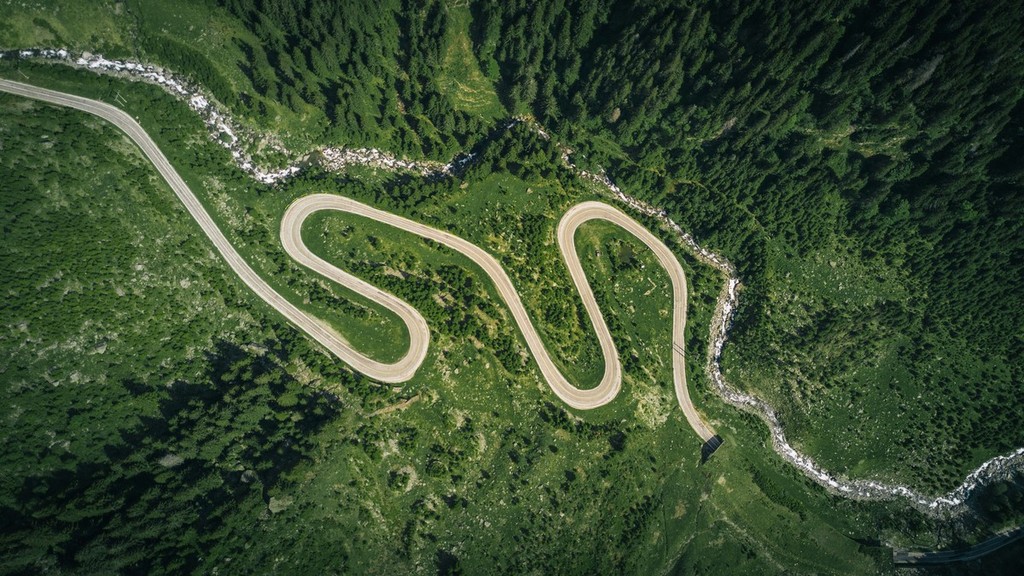
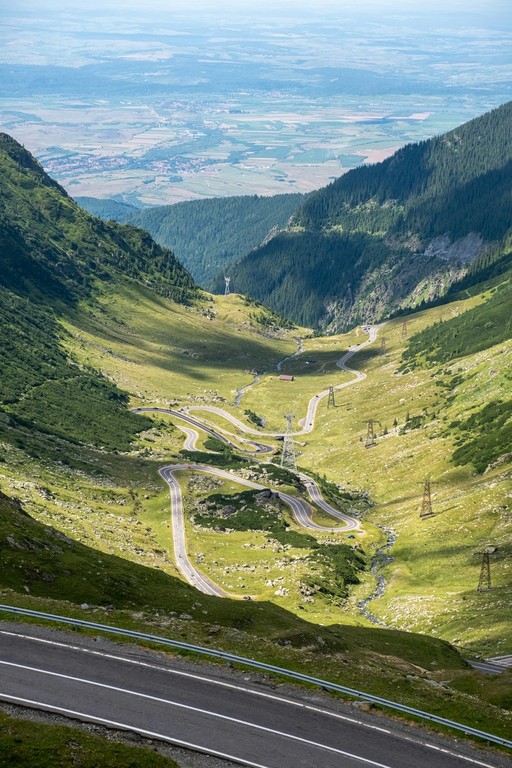
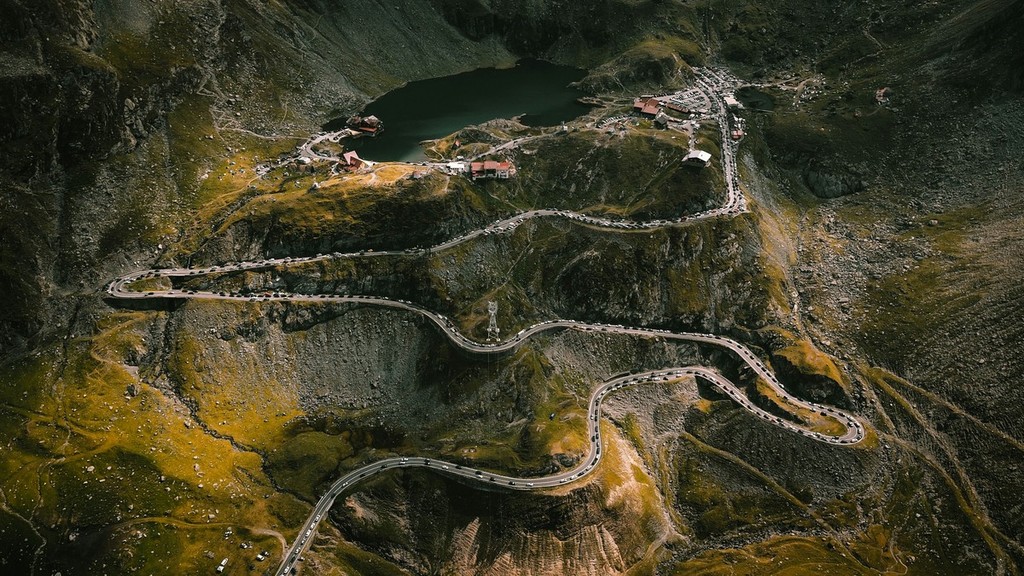
As the road continues to climb, the landscape changes dramatically. Deciduous forests give way to coniferous forests, which are gradually replaced by alpine vegetation. The hairpin bends become increasingly spectacular, and the road appears to wind around the mountainsides like a giant ribbon. On clear days, the view offered by these successive curves is one of the most photographed images in Romania. Many of the photographs that made the Transfăgărășan famous worldwide were taken in this area.
The highlight of the route is Bâlea Lake, a glacial lake formed in the basin of an ancient Quaternary glacier. Situated at over 2,000 metres above sea level, the lake is surrounded by imposing peaks that frequently exceed 2,400 and 2,500 metres. During the summer, the area is lively with tourists, mountaineers, and nature lovers, while in winter it becomes one of Romania's most spectacular mountain destinations. Near the lake stands the famous Ice Hotel, rebuilt every year from blocks of ice extracted directly from the lake. It attracts visitors from all over the world and represents a unique attraction in Eastern Europe.
Next to Bâlea Lake is the Bâlea-Capra Tunnel, the longest road tunnel in Romania. With a length of almost 900 metres, it cuts through the main ridge of the Făgăraș Mountains and connects the southern and northern slopes of the massif. Passing through the tunnel marks the transition from Wallachia to Transylvania and gives travellers the sensation of entering a completely different world. On the northern side, the scenery becomes even more spectacular, and the hairpin bends descend steeply towards the glacial valley of Bâlea and then towards the village of Cârțișoara.
The international fame of the Transfăgărășan increased dramatically after 2009, when the road was featured in the famous motoring television programme Top Gear. Impressed by the combination of scenery, route, and driving challenge, Jeremy Clarkson described it as "the most beautiful road in the world." This praise attracted the attention of car and motorcycle enthusiasts from around the globe and transformed the Transfăgărășan into an internationally renowned tourist attraction. Since then, thousands of foreign tourists have chosen Romania each year specifically to drive this route.
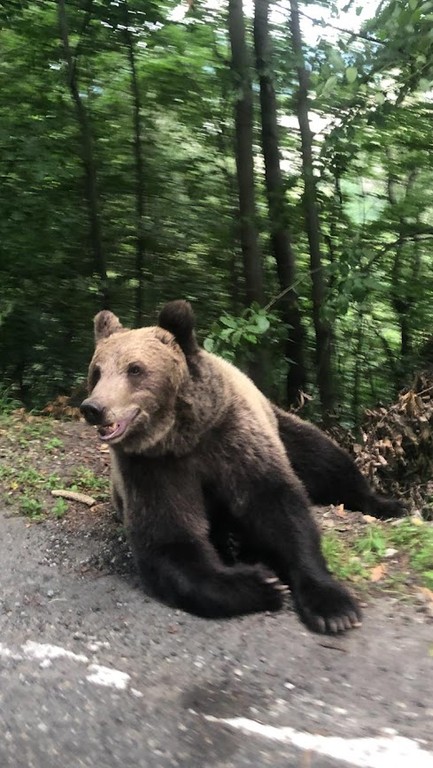
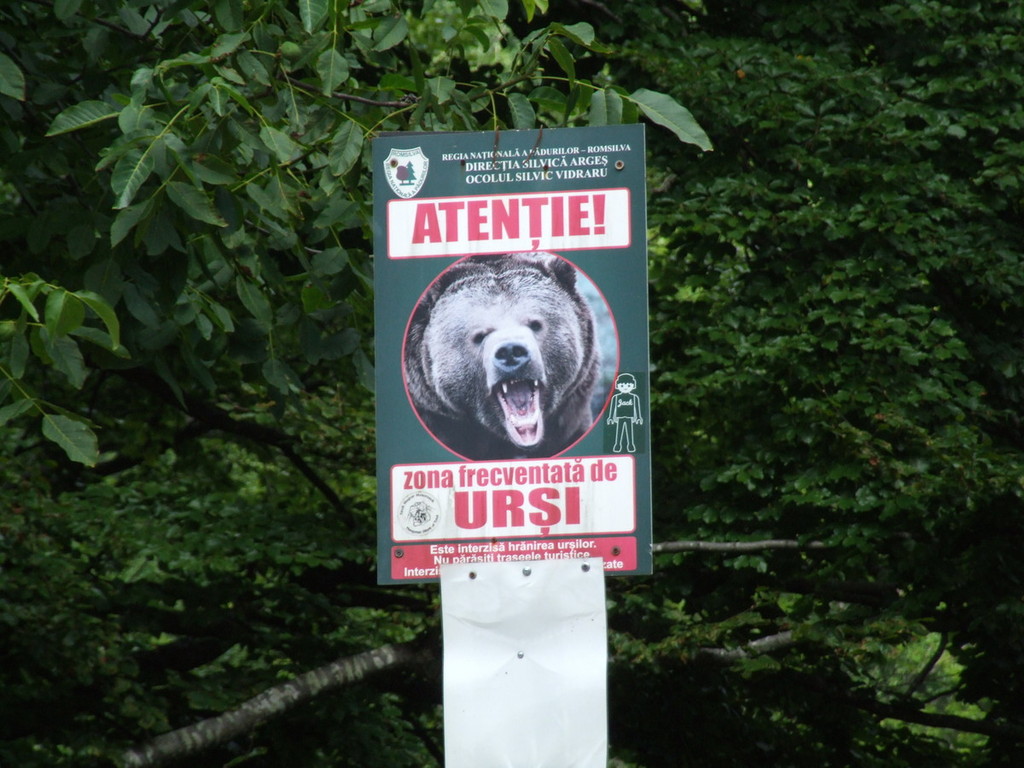
The Făgăraș Mountains also represent one of Europe's most important natural habitats. Along the route, numerous species of wildlife can be observed, including the brown bear, Carpathian red deer, chamois, lynx, and wolf. However, the frequent presence of bears near the road has become an increasingly serious issue in recent years, as many have been attracted by food offered by tourists. Experts constantly warn about the dangers associated with this practice and recommend keeping a safe distance from wild animals.
Due to extreme climatic conditions and the large amounts of snow that accumulate at high altitudes, the Transfăgărășan is fully open to traffic only for a few months each year, usually between late June and late October. During the rest of the year, the alpine section is closed for safety reasons, as avalanches and blizzards make road traffic impossible. Even during the summer season, weather conditions can change suddenly, and temperatures above 2,000 metres can be surprisingly low.
Today, the Transfăgărășan is much more than just a road. It represents a rare combination of history, engineering, nature, and adventure. It is a road built out of strategic necessity, yet transformed over time into a national symbol and a destination that fascinates millions of people. Every kilometre tells a story of ambition, sacrifice, and the extraordinary beauty of the Romanian landscape. For many travellers, driving the Transfăgărășan is not merely an excursion but a memorable experience—a direct encounter with one of the most spectacular expressions of nature and human ingenuity in Europe.
At present, beginning on 12 June, the Transfăgărășan is open to traffic daily between 07:00 and 21:00, offering all lovers of nature, adventure, and mountain scenery the opportunity to enjoy one of the most spectacular journeys in Romania and Europe.
Drive carefully, respect traffic restrictions and regulations, and above all:
DO NOT FEED THE BEARS!





 International editions: