


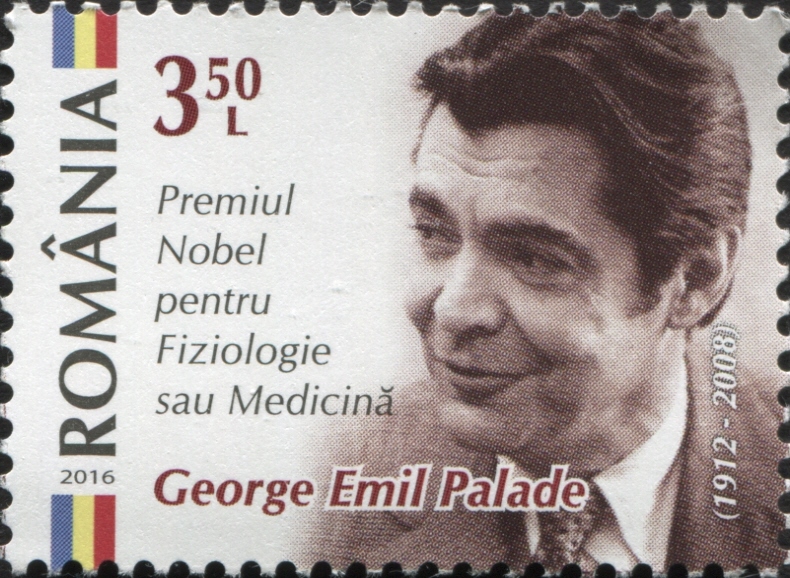
Born in Iași in 1912, Palade made fundamental contributions to the development of modern cell biology, and his research opened new perspectives on how the cells of living organisms function.
The anniversary of his birth holds particular significance for Romania, as it coincides with Researchers and Designers Day, observed annually in his honour. Established by Government Decision No. 764 of 1994, this day pays tribute to George Emil Palade's scientific achievements while also recognising the contributions of Romanian researchers and designers to scientific and technological progress.
George Emil Palade was born into a family of intellectuals in Iași. His father, Emil Palade, was a philosophy teacher, while his mother, Constanța Cantemir Palade, was a primary school teacher. His upbringing encouraged an early interest in knowledge and learning, eventually leading him towards a career in medicine and scientific research.
After completing his secondary education in Buzău, he chose to study medicine, graduating from the Faculty of Medicine in Bucharest in 1936. In 1940, he defended his doctoral thesis, entitled "The Uriniferous Tubule of the Dolphin: A Study of Comparative Morphology and Physiology", and subsequently continued his academic career in anatomy.
A decisive moment in his career came in 1946, when he moved to the United States to conduct research at the Rockefeller Institute in New York. There, he continued his investigations into cellular structures, using advanced electron microscopy techniques that made it possible to observe components of cells that could not be examined in detail using traditional methods.
Among his most significant achievements was the identification and description of ribosomes, cellular structures involved in protein synthesis, also known in scientific literature as "Palade granules". His research also contributed to understanding the roles of the endoplasmic reticulum and the Golgi apparatus in the production, processing, and transport of proteins within cells.
These discoveries fundamentally transformed scientists' understanding of how cells are organised and function, providing essential foundations for the development of modern biology and numerous subsequent advances in medical research.
In 1974, George Emil Palade was awarded the Nobel Prize in Physiology or Medicine, jointly with researchers Albert Claude and Christian de Duve, for their discoveries concerning the structural and functional organisation of the cell. The award represented one of the most significant international distinctions ever received by a Romanian-born scientist.
Throughout his career, George Emil Palade held important academic positions in the United States, including at the Rockefeller Institute and Yale University. His scientific achievements were recognised through numerous honours, including the National Medal of Science, awarded in the United States in 1986.
Although he spent most of his professional career in America, Palade maintained ties with Romania's scientific community. He supported the development of cell biology research in Romania and helped strengthen cooperation between Romanian researchers and the international scientific community.
George Emil Palade passed away in 2008 in the United States, at the age of 95, leaving behind a scientific legacy of global importance.
On the 114th anniversary of his birth, George Emil Palade's contributions remain a landmark in contemporary medicine and biology. His discoveries continue to be fundamental to understanding cellular processes, and his name remains associated with one of the most important chapters in the history of biomedical research.
Romania's Researchers and Designers Day honours the scientist's memory and highlights the importance of education, research, and innovation. It also provides an opportunity to recognise the contributions of Romanian scientists to the advancement of knowledge and the progress of society.





 International editions: