


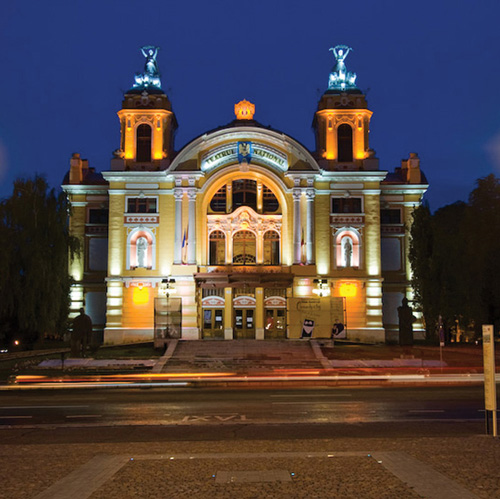
Located at the heart of the historical province of Transylvania, Cluj-Napoca is one of the largest cities in Romania and one of the most popular destinations for visitors. With a history of over 800 years, it is a fascinating tourist attraction with numerous culture centers, and a vibrant social and artistic life.
Cluj-Napoca is one of the leading centers of Romanian culture, and is home to various theatrical, musical and cinematic events. There are festivals, concerts, representations, contests and workshops organized throughout the year, which all contribute to Cluj’s relevance and precedence in the arts.
A center for contemporary experimental art is the Brush Factory, located on Henri Barbusse Street. A former brush factory, which is where it gets its name from, this venue constitutes a medium free of conventions, constraints and prejudices where artists can get their creative juices flowing. This is where new trends are defined in theatre, painting, sculpture, and in any kind of performance. If you want to get a feel for the local artistic movement, then the Brush Factory should definitely be on your list of places to visit. It will give you a sense of the artistic hues that tinge the philosophical and cultural options of Cluj-Napoca.
If you are more interested in canonical art, then The Art Museum, located at 30 Union Square, is the better choice for you. This museum has works by Stefan Luchian and Nicoale Grigorescu on a permanent display. In addition to these famous pieces, it also presents an evolution of Transylvanian art and specifically, art from Cluj starting with the 18th Century and continuing until the 20th.
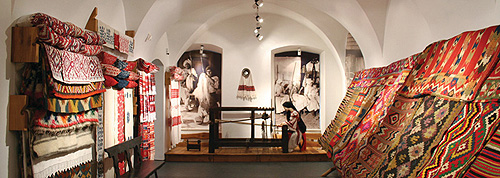
For those interested in the historical past of Transylvania, and particularly, in the professions people had a long time ago, in the way they used to dress and the rites they used to carry out, The Ethnographic Museum of Transylvania is a must-see. With a patrimony of over 41.000 artefacts, this museum documents the past of the most important nationalities inhabiting Transylvania, i.e. Romanians, Hungarians, Saxons and Roma. It is especially worthwhile visiting around this time because it will host the opening for the exhibition “Concepts in the Byzantine Art” for the 11th edition of The Days of Byzantine Art. The exhibition will contain works by the members of the group “Saint John of Damascus”.
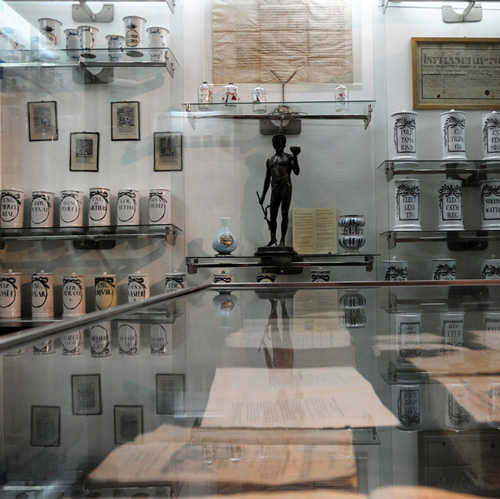
The Pharmacy Museum is another special place in Cluj-Napoca, as it is located in the same building where the first pharmacy in the city, “Saint George’s”, used to be. You can learn about the medicines that were used in the past, look at old recipe books or admire the valuable containers in which the potions were kept. Last year, at Dragobete (the Romanian Valentine’s Day), the museum pleasantly surprised its visitors by offering them each a recipe for a “love perfume”, which were quite common for the apothecaries of that time. Therefore, the Pharmacy Museum is a place where you can discover and revive wonderful old customs.
In addition to museums, there are plenty of other places where people can enjoy culture, like The National Theatre. This is also a nest for talented people for which Cluj-Napoca is renowned. A multiple-award winning director is Mihai Manutiu. Among them is the Prize for The Best Dramaturgy and The Prize for Best Director (2008) in Spain for his show Electra and The Prize for Best Show (2009) for Walpurgis Night. Furthermore, a very talented actress also working here is Miriam Cuibus, who is also Associate Professor at the Faculty of Theatre and Television in Cluj-Napoca. She received an accolade in 2008 for her role Eleonor in Tom Stoppard’s Rock’n’Roll and as a screenwriter for the show Memo in 2001.
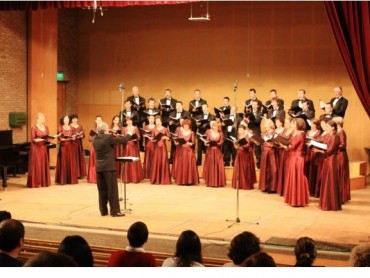
The State Philharmonic “Transylvania” is another landmark in the cultural life of Cluj-Napoca. With a tradition of 60 years, it is considered one of the best philharmonics in Romania. It owes its fame to the Master Antonin Ciolan, a former disciple of the Berlin-born Arthur Nikisch and the first to occupy the position of conductor and Art Director of the institution. The concerts are held every Friday evening from 9 p.m. in the Auditorium Maximum room at Babes-Bolyai University. Besides the permanent members of the philharmonic orchestra, famous international musicians are also invited from time to time. For instance, Paul Mann from Great Britain will conduct on the 13th of March, while on the 20th of the same month, the conductor Ladislau Horvath from Italy will take charge of the orchestra.





 International editions: