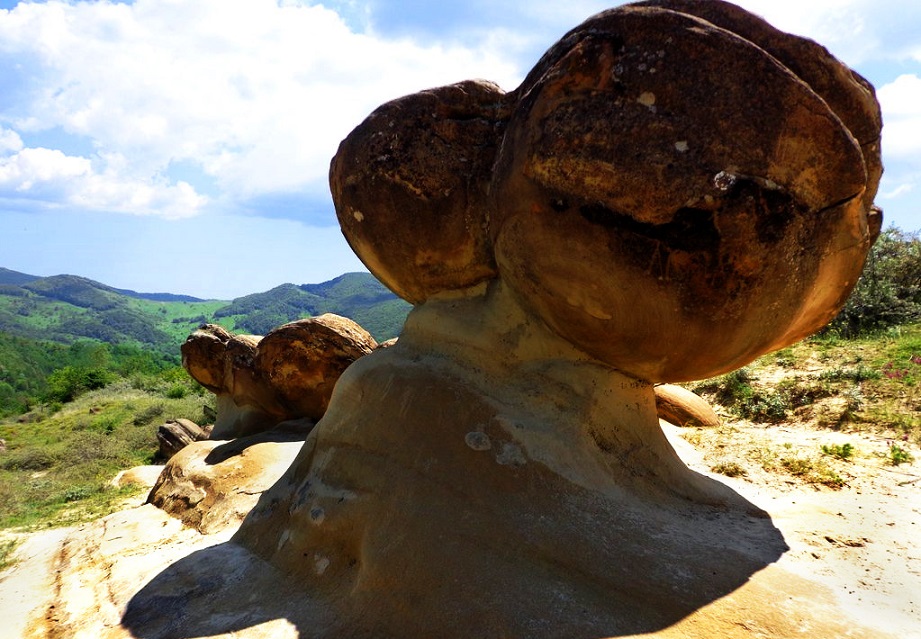
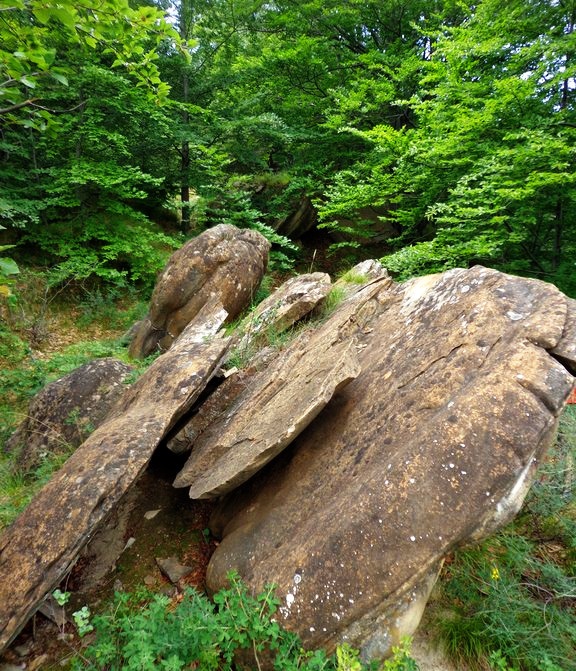
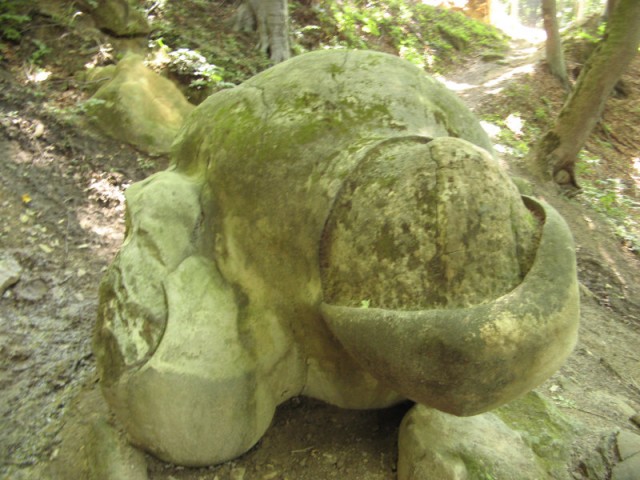
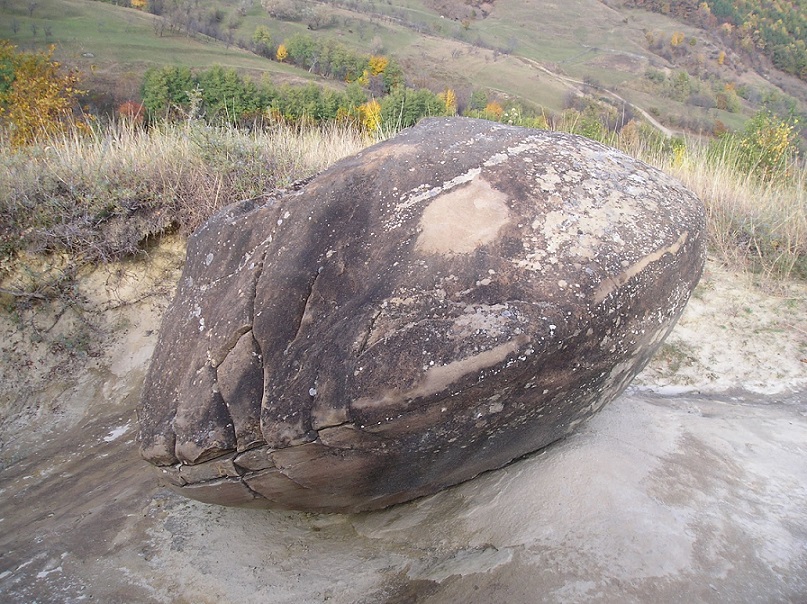
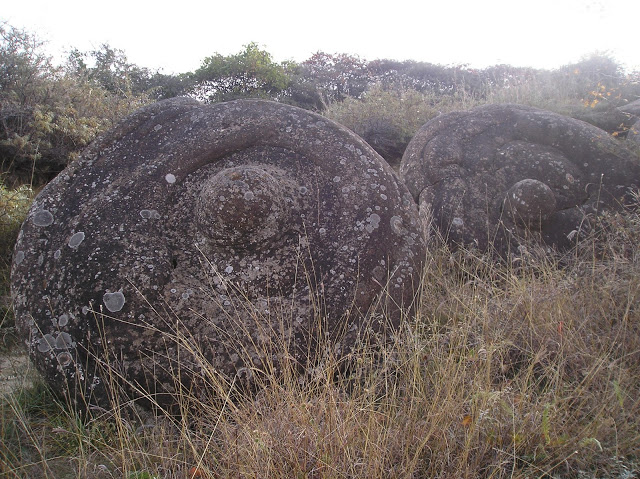
From a scientific perspective, trovants are clusters of small stones that gather and become cemented together by a carbonate binding material. They change their shape over the course of approximately 1,200 years, during which they grow by a few centimeters, expanding from the inside outward.
The local people call them “living stones” because, according to legend, they grow, change both their shape and location, and even reproduce. It is said that after heavy rains, tiny stones emerge, feeding on sand and gradually growing over time.
Numerous legends describe these stones as being of divine origin or as coming from other worlds. Locals believe they bring prosperity and good fortune, which is why many gates are guarded by a trovant. They also claim that the trovants can move from one place to another, simply breaking free from the ground and leaping elsewhere. The largest among them — called “the old women” by the villagers — can be admired from the heart of the village, high on the mountain ridges.
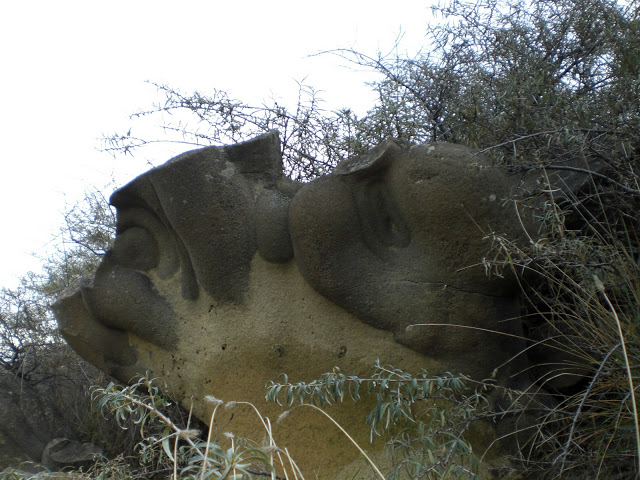
Beyond all these stories, some researchers, archaeologists, paleontologists, philosophers, and mystics have proposed various other hypotheses: that trovants might represent a transition between the mineral and vegetal kingdoms; that they may have divine or extraterrestrial origins; that they could be artifacts, fossils of plants or animals, gigantic dinosaur eggs, or petrified prehistoric creatures.
Mystics and ancient philosophers believed that stones possess a special energetic charge capable of interacting with human energy. They have long been used — and continue to be used — in various therapies based on energetic exchange. Stones are also said to hold the oldest memory on Earth, having witnessed the very formation of the planet.
Perhaps these “living stones,” curious and still undeciphered creations, hold the key to all the strange events and mysteries that have surrounded this land in the Buzău Mountains from ancient times to the present day.








 International editions: