


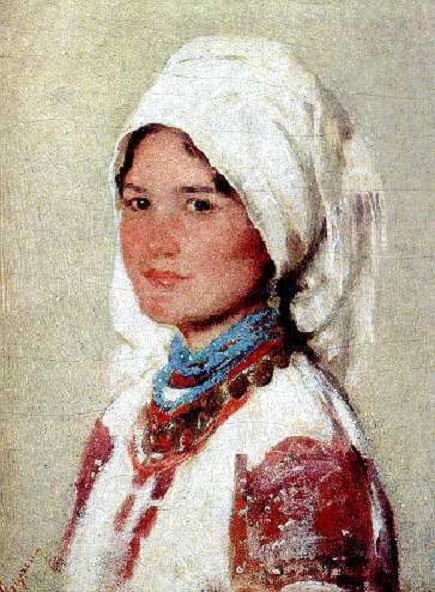
The painter Nicolae Grigorescu is among the values Romanians consider when speaking about significant personalities and beyond. First and foremost, his paintings depict the traditional world of the Romanian village.
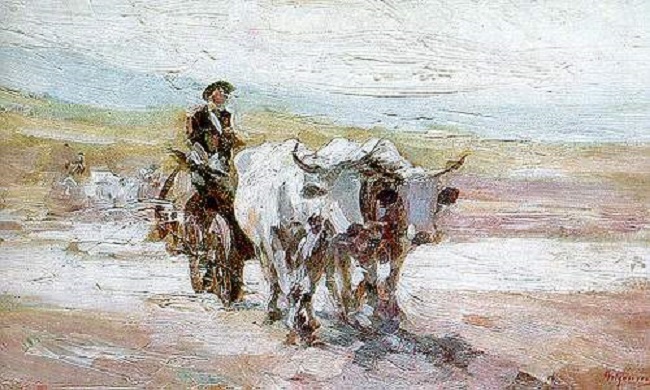
Even though his work did not focus exclusively on this theme, Grigorescu became famous for paintings such as Țărancă din Muscel (Peasant Woman from Muscel) and Carul cu boi în luncă (Ox Cart in the Meadow), works that reflect the archaic, traditional side of rural life.
Convinced that it is not the brush that creates a painting, but feeling itself, Nicolae Grigorescu is regarded as the first modern painter of Romanian art, within the broader context of cultural evolution in the late 19th century.
Also called “the great interpreter of National Romanticism,” simplicity and sincerity define Grigorescu’s art. He found an ideal way to portray the Romanian peasant and to render Romanian landscapes authentically. Beyond this subject, which brought him recognition, Grigorescu also distinguished himself through icon painting.
For this reason, he traveled abroad to study the works of great painters and learn from them. His early work in icon painting led to church decoration, and he became well known for painting the monasteries of Zamfira Monastery and Agapia Monastery.
Paintings such as Bătrână cu gâștele (Old Woman with Geese), Paznicul de la Chailly (The Guard of Chailly), Interior de curte la Barbizon (Farmyard Interior at Barbizon), and Apus de soare la Barbizon (Sunset at Barbizon) are among the works created during his time in France, where he developed his personal style and technique.
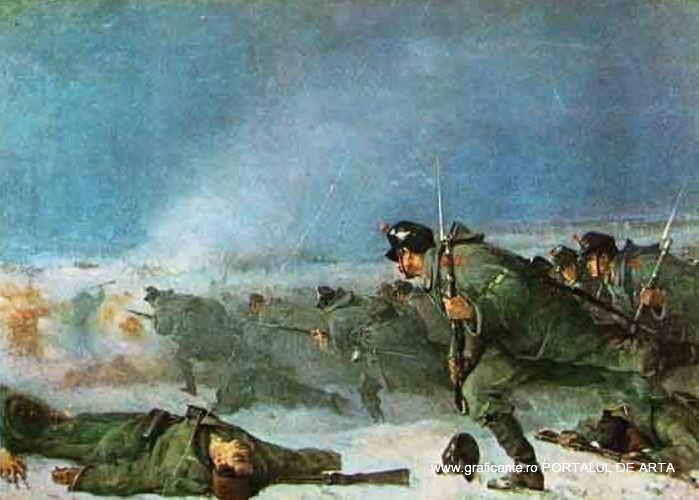
Since he drew much of his inspiration from the Romanian landscape, the Romanian War of Independence became a defining experience that enriched his work. Joining the troops as a war correspondent, Grigorescu painted Roșiorul (Cavalryman), Santinela (The Sentinel), and Atacul de la Smârdan (The Attack at Smârdan), the latter being considered his most important military composition.
As with the paintings depicting village life, those from his war period illustrate another significant stage in his artistic development. At the same time, a clear contrast can be observed between the sensitivity of his rural scenes—featuring grazing herds, spinning peasant women, or girls in nature—and the dramatic war compositions, marked by violence and death.
Simplicity, sincerity, and talent define his artistic vision. As he himself stated: “You can paint with a piece of charcoal, and all the paint tubes in the world cannot give you the blue of a flax flower if you do not carry it in your heart.”




 International editions: