


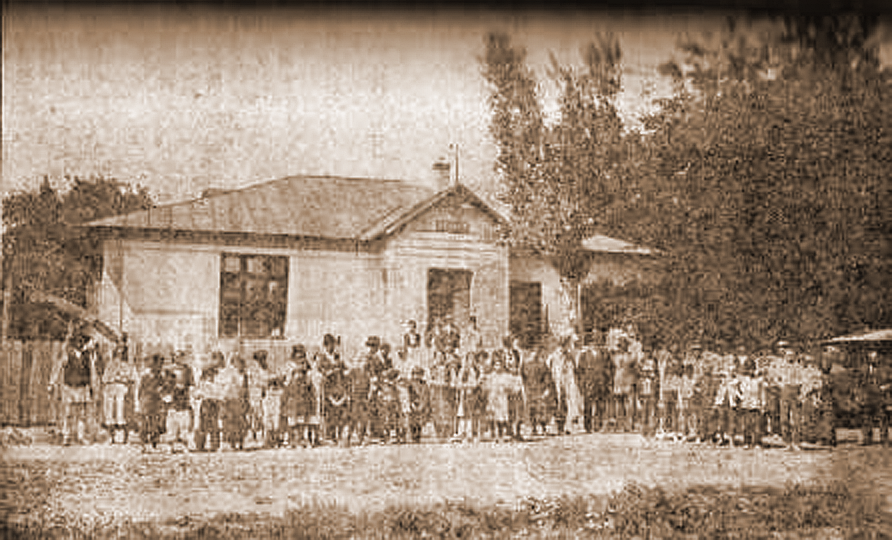
Teachers play a fundamental role in shaping generations, transmitting knowledge and contributing to the cultural and social development of communities. Established by UNESCO in 1994, World Teachers’ Day commemorates the adoption, in 1966, of the ILO/UNESCO Recommendation concerning the Status of Teachers. In 2026, the occasion is particularly significant as it marks 60 years since the adoption of this international document.
In Romania, the history of education is closely connected to the names of teachers, scholars and educators who understood that the development of society begins with education. Some founded institutions, others modernised teaching methods, introduced new disciplines or contributed to the development of Romanian culture. Among them are Gheorghe Lazăr, Spiru Haret and Onisifor Ghibu, whose work left a lasting mark on the history of Romanian education.
Gheorghe Lazăr and the beginnings of higher education in Romanian
One of the most important figures in the history of Romanian education is Gheorghe Lazăr, a scholar, educator, theologian and engineer from Avrig, in Sibiu County. Educated in Transylvania and later a student in Vienna, Lazăr moved to Bucharest in 1816, where he devoted himself to the development of modern education in the Romanian language.
A decisive moment came in 1818, when classes began at the School of Philosophy and Mathematical Sciences at Saint Sava. The institution is considered the first Romanian higher school where advanced subjects were taught in Romanian. The curriculum included arithmetic, geometry, trigonometry, algebra, geography, philosophy and engineering.
Lazăr’s contribution went beyond the establishment of a school. Through his teaching and textbooks, he also helped develop scientific and technical terminology in Romanian. A number of mathematical terms that remain familiar today entered Romanian educational language during this period.
The school at Saint Sava soon became an important centre of Romanian culture. Among its early students were figures such as Petrache Poenaru, Simion Marcovici and Teodor Paladi.
Spiru Haret and the modernisation of Romanian education
Another major figure in the history of Romanian education is Spiru Haret, a mathematician, professor and scientist who served several times as Minister of Education. His name is closely associated with a major period of reform and modernisation in the Romanian education system at the end of the 19th and beginning of the 20th century.
During this period, education increasingly came to be viewed as an essential instrument for social and economic development. The reforms associated with Spiru Haret sought to improve the organisation of the education system, expand access to schools and strengthen the role of teachers and education in Romanian society.
His name remains attached to numerous educational institutions across Romania, from schools and high schools to higher education institutions, making Spiru Haret one of the best-known figures in the history of Romanian education.
Onisifor Ghibu and Romanian education in Transylvania
For the history of education in Transylvania, Onisifor Ghibu holds a particularly important place. An educator, professor and publicist, Ghibu supported the development of Romanian education and played an important role in organising the educational system during the period following 1918.
His work was closely connected to the transformations experienced by Romanian education in Transylvania and to the efforts to build a modern educational system capable of responding to the new realities of Romania after the Great Union.
From village teachers to university professors, the Romanian education system was shaped by generations of educators. Their stories are also the stories of institutions that became important cultural and academic landmarks.
The schools that made history
Some of Romania’s most important educational institutions have their origins in educational projects developed during the 19th and 20th centuries. The school at Saint Sava, for example, represented a fundamental moment in the development of higher education in Romanian. Over time, this educational tradition contributed to the emergence of one of the country’s major academic institutions.
In Transylvania, denominational schools and educational institutions established and developed during the 19th and early 20th centuries also played an important role in preserving the Romanian language and culture and in educating generations of intellectuals.
Today, historic school buildings, high schools and universities form part of the cultural heritage of many Romanian cities. They are more than educational spaces: they are places where generations of writers, scientists, artists, doctors and engineers were educated and where personalities who contributed to the transformation of Romanian society began their journeys.
World Teachers’ Day is therefore also an opportunity to look back at this history. In 2026, UNESCO is highlighting the importance of strengthening and protecting the teaching profession at a time when education is undergoing major changes, from the development of digital technologies to the growing need for inclusion and adaptation to new social realities.
From Gheorghe Lazăr, who more than two centuries ago advocated for higher education in Romanian, to the teachers working in classrooms today, the role of the educator remains connected to the same fundamental idea: education does not simply transmit knowledge. It helps shape society and preserve culture.
October 5 is therefore not only a day dedicated to teachers today, but also an opportunity to rediscover the people and institutions that helped build modern Romania.




 International editions: