


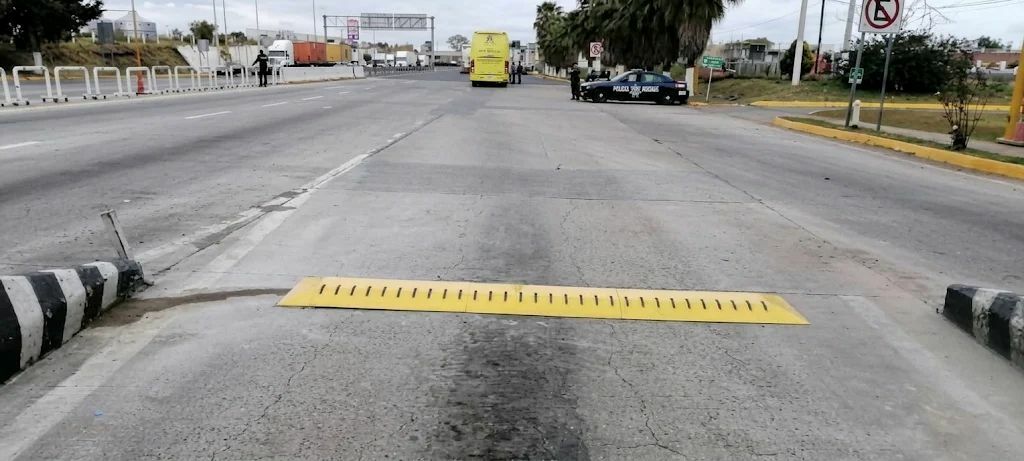
Protecting a vehicle entrance involves more than installing a visible barrier. A tyrekiller becomes part of a wider access strategy in which traffic direction, authorization procedures, site layout, and emergency planning must work together without disrupting legitimate movement.
Security Begins with the Movement of Traffic
Vehicle security is often discussed in terms of resistance, yet the first consideration is usually traffic behavior. Every entrance has its own rhythm: employees may arrive in concentrated periods, delivery vehicles may require additional clearance, and visitors may need time to receive instructions. A well-planned system responds to these patterns by creating an unmistakable route through the controlled area. Road markings, signs, lighting, barriers, and surveillance points all contribute to a sequence that drivers can understand before reaching the restrictive equipment.
A tyrekiller is designed to reinforce one-way movement by presenting retractable or fixed spikes against vehicles travelling in an unauthorized direction. Its effectiveness therefore depends heavily on positioning. Poor visibility can cause confusion, while insufficient space around the installation may complicate turning and vehicle inspection. Designers generally consider lane width, approach speed, drainage, foundations, and the types of vehicles expected on site. The aim is not merely to add an obstacle, but to make the entire checkpoint predictable for authorized users and difficult to bypass.
Choosing an Operating Method for the Site
Different environments require different levels of control, which is why these systems are commonly available in manual, semi-automatic, and automatic configurations. Manual equipment can suit entrances where operating frequency is limited and staff can manage access directly. Semi-automatic designs may reduce the physical effort involved while retaining straightforward local operation. Automatic models can be integrated with control panels, gates, barriers, identification systems, or staffed security stations, making them relevant to sites with frequent traffic and more complex authorization procedures.
The distinction between these formats is practical rather than purely technical. A facility manager comparing tyrekiller options needs to evaluate how often the lane will be used, who will operate the equipment, and what should happen during a power interruption or emergency. Automatic operation may provide faster coordination with other access devices, but it also calls for appropriate electrical planning and maintenance. Manual operation can be simpler, although it may be less convenient at a busy entrance or in locations where rapid changes in traffic flow are common.
Integration Matters More Than a Single Product
No vehicle-control device operates in isolation. The surrounding architecture determines whether the installation feels like a coherent checkpoint or an improvised collection of obstacles. Gates can manage general access, bollards can define protected boundaries, and road blockers can provide another layer of resistance. Cameras, intercoms, card readers, and license plate recognition systems may support verification. When these elements are coordinated, each component performs a clear role and operators gain a better overview of approaching and departing vehicles.
Physical conditions also shape long-term performance. Outdoor installations face rain, dust, temperature changes, road debris, and repeated wheel loads, so inspection access and drainage deserve attention during the initial design stage. Maintenance planning may include cleaning moving parts, checking controls, testing safety functions, and examining the surrounding pavement. These tasks are easier when service requirements have been considered before construction rather than after equipment has already been embedded in the roadway.
Planning for Safe and Understandable Operation
A secure entrance must remain legible to legitimate drivers. Clear warning signs, suitable lighting, controlled approach speeds, and visible lane boundaries reduce the risk of accidental contact. Staff training is equally important because operators need to understand normal procedures, exceptional access requests, and the sequence used when coordinating several barriers. Emergency vehicles, maintenance contractors, buses, and unusually long or low-clearance vehicles may require specific arrangements that differ from everyday passenger-car access.
The most useful way to assess a tyrekiller is therefore to examine the complete movement of a vehicle through the site. From the first sign at the perimeter to the final authorization point, every stage should support the same traffic logic. A carefully designed entrance combines deterrence with clarity, allowing approved vehicles to pass efficiently while making unauthorized movement increasingly difficult. In that context, the equipment is not simply a severe-looking road device; it is one part of a disciplined and carefully planned security environment.





 International editions: