


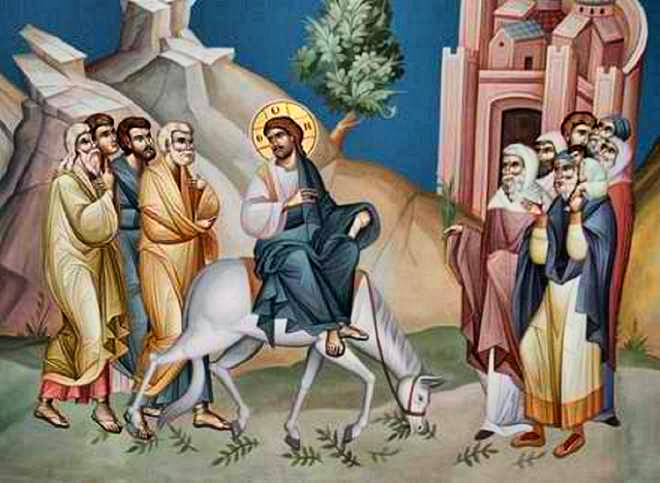
It should be noted that, in Romanian tradition, spring holidays (and the beginning of summer) are far more numerous and spectacular. This is due to the fact that, for a long time, agrarian communities in Eastern Europe associated the beginning of the new year with this season.
The same phenomenon can be observed in the case of Palm Sunday which, according to ethnologists, represents the personification of flowers celebrated on the so-called Flower Sunday (Florii). Over this pre-Christian layer, the Christian Church superimposed the feast of Jesus’ triumphal entry into Jerusalem (Ion Ghinoiu, Mică Enciclopedie de tradiții românești, Bucharest, Agora, 2008).
To the rebirth of nature—when plants, willows, and fruit trees begin to blossom—new meanings were added, especially those related to the cult of ancestors (Ghinoiu, 2008). Such transitional moments, marking the passage between old and new cycles, are traditionally associated with the veneration of the spirits of the deceased.
In general, willow branches are considered to symbolize the palm branches with which Jesus was welcomed into Jerusalem. However, in Romanian traditional culture, their meanings are far more complex. One of their main functions is apotropaic: when used to decorate crosses, graves, shrines, windows, doors, and gates, they are believed to provide protection and to ward off evil spirits (Ghinoiu, 2008).
Another important role of willow branches is their fertilizing function. They are given to animals to ensure fertility, placed in fields, or hung in fruit trees and vineyards to promote abundant harvests. They also have a magical dimension: according to popular belief, they can prevent back pain during harvest if worn, protect against storms and hail, and are used in various rituals and incantations.
On Palm Sunday, in some villages of Oltenia, women would prepare willow wreaths that were later used during the Circovii Marinei (July 16–18) for healing rituals. Willow coronets were also considered sacred objects, used in wedding customs and worn during ritual dances such as Paparude.





 International editions: