


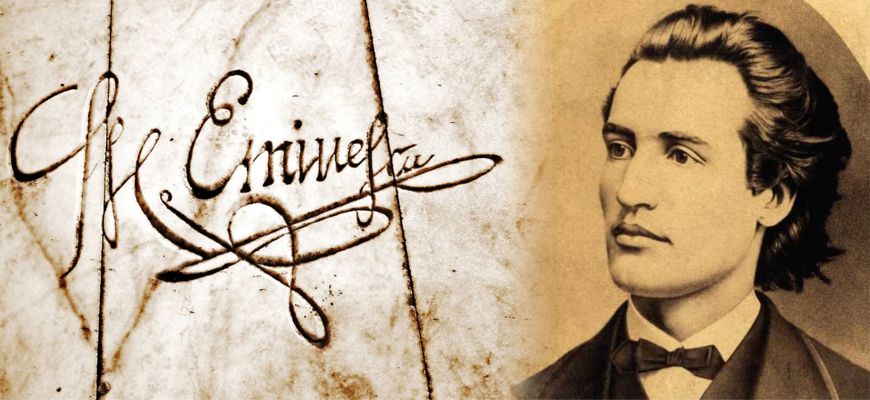
From Ipotești, the place associated with the poet’s childhood, to Bucharest, where he lived, worked and spent the final period of his life, his legacy can be found in memorial houses, cultural institutions, monuments and historic parks.
The journey can begin in Ipotești, in Botoșani County, a place closely associated with Eminescu’s childhood and today home to the Ipotești Memorial – National Center for Eminescu Studies. The complex preserves the memory of the Eminovici family and is dedicated to research and the promotion of Eminescu’s work. The site includes buildings and spaces connected with the poet and his family, providing an important starting point for understanding the environment in which his early years unfolded.
The route can then continue to Bucharest, where Eminescu lived during several periods and carried out an important part of his literary and journalistic activity. Among the places associated with his life in the capital are Plantelor Street, where he spent his final days, Speranței Street, where he lived and received his friend Ion Creangă, and Covaci Street, connected with the former headquarters of the newspaper “Timpul”, where Eminescu worked as a journalist.
Eminescu’s memory is also present in several of Bucharest’s historic green spaces. In Cișmigiu Garden, one of the city’s best-known historic parks, the Rotunda of Romanian Writers includes a bust of Mihai Eminescu. The ensemble, created in the 20th century, brings together busts dedicated to several major Romanian writers and represents one of the cultural landmarks of the park.
Another stop on the route is King Michael I Park, also known as Herăstrău. Among the monuments and sculptures found in the park is a bust of Mihai Eminescu, created by sculptor Mihai Onofrei in 1953. The park also contains monuments and busts dedicated to other important figures from Romanian and international culture.
An additional landmark can be found near the Romanian Athenaeum, where the monument dedicated to Mihai Eminescu, created by sculptor Gheorghe Anghel, stands in the park surrounding the building. Installed in 1965, the monument adds another important point to a cultural itinerary dedicated to the poet in central Bucharest.
From the family landscape of Ipotești and the places associated with Eminescu’s childhood to the streets, institutions and parks of Bucharest, a journey “In Eminescu’s Footsteps” offers a different way of discovering Romania through its literary heritage. It connects places, memories and cultural landmarks while providing an opportunity to revisit the life and work of one of the defining figures of Romanian literature.




 International editions: