


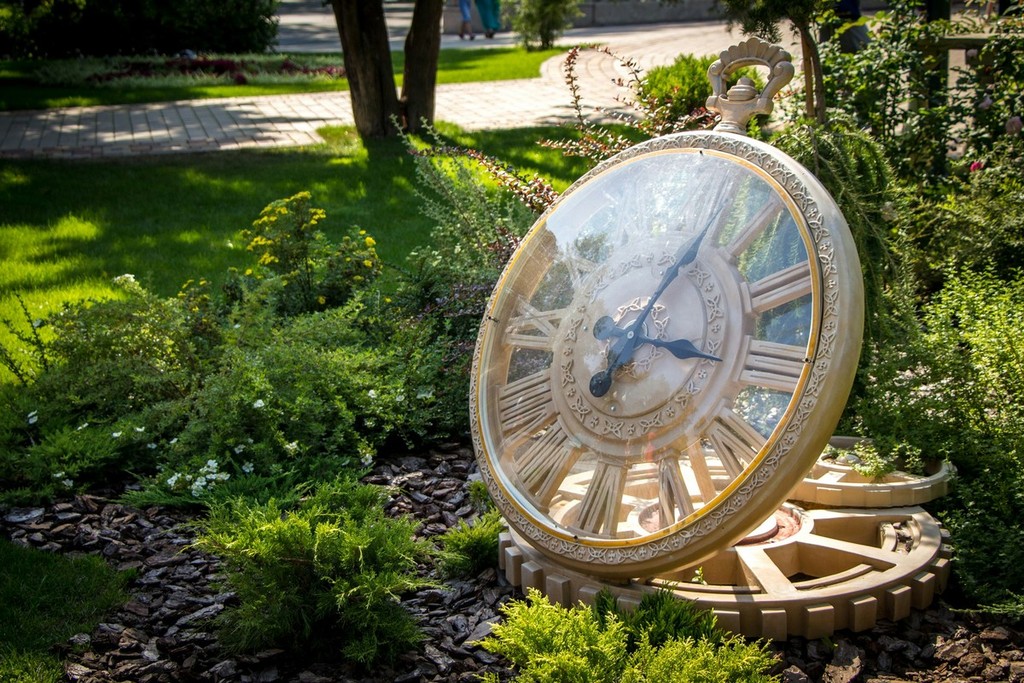
Clocks will be turned back by 60 minutes, meaning that 4:00 a.m. will become 3:00 a.m. The change marks the return to standard time and will give people in Romania an extra hour of sleep.
Sunday, October 25, will be the longest day of the year in terms of clock time, lasting 25 hours. Following the change, mornings will become lighter, while darkness will fall earlier in the evening according to the clock.
Romania will return to Eastern European Time (EET), corresponding to the UTC+2 time zone, after observing Eastern European Summer Time (UTC+3) during the warmer months.
The seasonal clock change has a history spanning more than a century. It was introduced primarily to make better use of natural daylight and reduce energy consumption.
The first widespread applications of daylight saving time in several European countries took place during World War I, when conserving energy resources became a priority.
By moving clocks forward by one hour in spring, people could benefit from more natural daylight in the evening, reducing the need for artificial lighting.
Over time, some countries abandoned the system, while others reintroduced it, particularly during the 1970s in response to the energy crisis.
The practice has also been associated with opportunities for people to spend more time outdoors after work, taking advantage of longer daylight hours in the evening.
Romania first introduced daylight saving time in 1932, initially applying it between May 22 and October 2.
Between 1933 and 1940, the seasonal clock change continued to be observed. However, the system was discontinued between 1941 and 1979.
Daylight saving time was reintroduced in Romania in 1979 through a decree aimed at conserving energy resources and making more efficient use of natural daylight.
Since 1997, Romania has followed the current system, under which clocks move forward by one hour on the last Sunday in March and back by one hour on the last Sunday in October.
The system involves two adjustments each year. In spring, clocks are moved forward by one hour to provide more daylight during the evening. In autumn, clocks are turned back, marking the return to standard time.
At the European Union level, seasonal clock changes are regulated by Directive 2000/84/EC, which establishes a common schedule for Member States.
Harmonizing these changes also helps ensure the smooth operation of transport, communications, and economic activities between European countries.
Although discussions have taken place about abolishing seasonal clock changes, the system continues to be applied throughout the European Union.
Although the transition to winter time provides an opportunity for an additional hour of sleep, the adjustment can temporarily affect the body's biological rhythm.
Some people may experience fatigue, drowsiness, or difficulty concentrating during the first few days following the change.
Maintaining a regular sleep schedule, spending time in natural daylight, and following consistent rest routines can help the body adapt.
In general, mobile phones, computers, and other internet-connected devices update their clocks automatically, provided the automatic time adjustment feature is enabled. Mechanical clocks and devices without automatic updates must be adjusted manually.
Following the transition to winter time on October 25, 2026, the next clock change is scheduled for Sunday, March 28, 2027.
On that date, Romania will return to daylight saving time, and clocks will move forward by 60 minutes, meaning that 3:00 a.m. will become 4:00 a.m.
Until then, Romania will observe Eastern European Standard Time (UTC+2).
Seasonal clock changes therefore remain an established practice in Romania and other European Union Member States, more than a century after the first European initiatives to adapt daily schedules to the availability of natural daylight.





 International editions: