


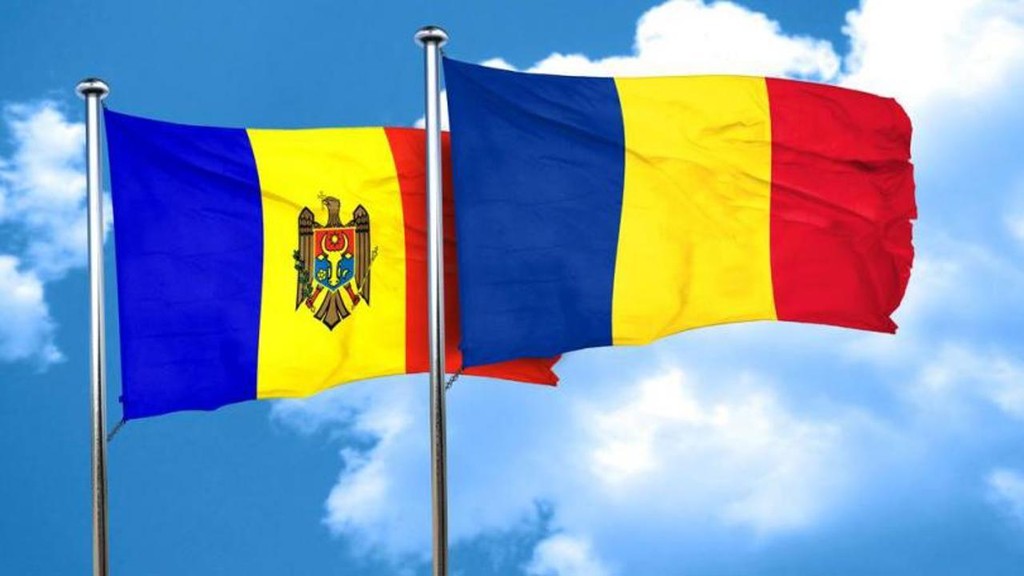
Romania and the Republic of Moldova are two independent states, but the connection between them extends far beyond geographical borders and conventional diplomatic relations. Their shared history, the Romanian language, traditions, culture, religious beliefs, and personal relationships have created a profound bond over the centuries, one that continues to be reflected in the everyday lives of communities on both banks of the Prut River.
Although they have followed different political paths and experienced difficult historical periods, the two countries have preserved numerous elements of their common heritage. From cultural figures and traditional celebrations to economic, educational, and family relationships, Romania and the Republic of Moldova represent an example of closeness between two states that share an important part of the same historical legacy.
To understand the relationship between Romania and the Republic of Moldova, we must look back to the Principality of Moldavia, one of the medieval Romanian principalities.
Established in the 14th century, the Principality of Moldavia included territories that today belong to Romania, the Republic of Moldova, and Ukraine. Throughout its existence, it developed political institutions, cultural traditions, and commercial connections that contributed to the formation of a shared historical identity.
One of the best-known figures of this period is Stephen the Great, who ruled Moldavia between 1457 and 1504. He remains an important figure in the historical and cultural memory of communities on both sides of the Prut River.
Medieval fortresses, monasteries, chronicles, and traditions preserved to this day recall a time when the present-day border between the two countries did not exist.
A decisive moment came in 1812, when, following the Treaty of Bucharest between the Russian Empire and the Ottoman Empire, the eastern part of the Principality of Moldavia, located largely between the Prut and Dniester rivers, was annexed by the Russian Empire. The territory became known as Bessarabia.
This change profoundly influenced the region's political, administrative, and cultural development, setting it on a different historical path from the Moldavian territories west of the Prut.
On March 27, 1918, according to the Julian calendar then used in Bessarabia, corresponding to April 9 in the Gregorian calendar, Sfatul Țării, the legislative assembly in Chișinău, voted in favor of Bessarabia's union with Romania.
The event represented a fundamental moment in the shared history of the two territories and preceded the other major unions that contributed to the formation of Greater Romania later that year.
During the interwar period, Bessarabia was part of Romania, and its administrative institutions, education system, and cultural life underwent significant transformations.
The situation changed dramatically in 1940, when the Soviet Union, in the context of the consequences of the Molotov-Ribbentrop Pact, issued an ultimatum to Romania and occupied Bessarabia, Northern Bukovina, and the Hertsa region.
Subsequently, most of the territory of present-day Moldova was incorporated into the Moldavian Soviet Socialist Republic, while other parts of former Bessarabia became part of the Ukrainian Soviet Socialist Republic.
The following decades were marked by profound political and social changes, deportations, repression, collectivization, and Sovietization policies. During this period, Soviet authorities promoted a Moldovan linguistic identity distinct from Romanian, including through the use of the Cyrillic alphabet.
Despite these changes, numerous traditions, customs, and forms of cultural expression continued to be passed down within families and communities.
On August 27, 1991, the Republic of Moldova declared its independence from the Soviet Union, becoming a sovereign state.
Romania was the first country to recognize its independence, a gesture of considerable diplomatic and symbolic significance.
After 1991, relations between the two countries developed across numerous sectors, from education and culture to the economy, infrastructure, and institutional cooperation.
The opening of borders, increased opportunities for travel, university exchanges, and direct contact between citizens helped strengthen relationships between communities on both sides of the Prut River.
Today, Romania and the Republic of Moldova have their own institutions, political systems, and domestic policies, while maintaining a special bilateral relationship supported by their historical and cultural closeness.
Language represents one of the most important elements shared by Romania and the Republic of Moldova.
Romanian is the official language of both states. In the Republic of Moldova, this designation was explicitly established in national legislation in 2023, following a 2013 Constitutional Court ruling that recognized the precedence of the wording in the Declaration of Independence, which refers to the Romanian language.
Beyond regional differences in pronunciation, vocabulary, and expression, the inhabitants of the two countries share the same language and a common literary tradition.
Writers such as Mihai Eminescu, Ion Creangă, Vasile Alecsandri, and Grigore Vieru occupy an important place in Romanian cultural heritage and in the cultural life of the Republic of Moldova.
Grigore Vieru, born in Bessarabia in 1935, became one of the symbols of the cultural connection between the two banks of the Prut River. His poetry, often dedicated to his mother tongue, motherhood, and cultural identity, continues to be read and appreciated in both countries.
The shared language facilitates not only communication but also access to literature, education, journalism, music, and artistic productions.
Beyond history and language, Romania and the Republic of Moldova share numerous folk traditions that have been preserved and passed down through generations.
Christmas carols, New Year's traditional greetings, Mărțișor, Easter customs, folk dances, and traditional clothing are all part of the cultural heritage of communities on both sides of the Prut River.
Mărțișor holds a particularly special place. Celebrated at the beginning of March, it symbolizes the arrival of spring and involves offering a small decorative object tied with a red-and-white string.
In 2017, cultural practices associated with March 1 were inscribed on UNESCO's Representative List of the Intangible Cultural Heritage of Humanity through a joint nomination by Romania, the Republic of Moldova, Bulgaria, and North Macedonia.
Folk music represents another bridge between the two countries. The hora, sârba, doina, and other forms of traditional music and dance are present in the cultural repertoires of Romanian and Moldovan communities.
Numerous religious celebrations and family customs also share common elements, although some communities observe them on different dates depending on the ecclesiastical calendar they follow.
Gastronomy is one of the most accessible expressions of the countries' shared heritage.
Mămăligă, sarmale, plăcinte, zeamă, traditional soups, meat aspic, and cheese-based dishes can be found, in different forms, in the traditional cuisines of both Romania and the Republic of Moldova.
Recipes may vary from one region to another, and even from one family to another, but many ingredients and cooking techniques are similar.
Traditional pastries filled with cheese, potatoes, cabbage, or pumpkin are particularly popular in the Republic of Moldova and the historical region of Moldavia in Romania.
Mămăligă, a traditional cornmeal dish served with cheese, sour cream, meat, or fish, is another example of the close relationship between the two culinary traditions.
Festive meals, preparing food together as a family, and hospitality are important elements of community life in both countries.
Cultural connections between Romania and the Republic of Moldova are visible in literature, theater, cinema, music, and the visual arts.
Artists and writers from the Republic of Moldova frequently participate in cultural events in Romania, while Romanian institutions collaborate with partners in Chișinău to organize festivals, exhibitions, and educational projects.
Romanian-language literature represents a shared space for artistic expression, in which authors from both sides of the Prut contribute to the development of the same linguistic tradition.
In music, performers and bands originating from the Republic of Moldova have gained popularity in Romania and internationally.
Groups such as Zdob și Zdub and Carla's Dreams, alongside numerous other artists, demonstrate that the shared cultural space continues to develop through contemporary forms of expression.
Festivals, concerts, film productions, and joint artistic projects help bring audiences closer together and promote creativity in both countries.
Education is one of the most important areas of cooperation between Romania and the Republic of Moldova.
Over the years, numerous young people from the Republic of Moldova have chosen to study at Romanian universities, benefiting from scholarship programs and places allocated to Moldovan citizens under conditions established by Romanian authorities.
Cities such as Iași, Bucharest, Cluj-Napoca, Timișoara, and Galați have become important university destinations for students arriving from across the Prut.
For many of these students, studying in Romania represents not only an opportunity for professional development but also a chance to gain a deeper understanding of the neighboring country's history, culture, and society.
Educational cooperation includes academic exchanges, research projects, university partnerships, and initiatives promoting the Romanian language.
These connections contribute to the development of new generations of professionals and help strengthen relationships between the two societies.
One of the deepest connections between Romania and the Republic of Moldova is the bond between their people.
Numerous families have relatives on both sides of the Prut River, and personal relationships continued to exist even during periods when crossing the border was difficult.
Following Moldova's independence, citizens became increasingly mobile, while family, professional, and cultural contacts intensified.
Many citizens of the Republic of Moldova live, study, or work in Romania. Some also hold Romanian citizenship under the applicable legislation.
For these individuals, the connection between the two countries is an everyday reality reflected in family life, education, employment, and social relationships.
Communities located near the border have also developed cooperation agreements, town-twinning partnerships, and joint projects.
In recent decades, economic cooperation has become an essential component of the relationship between Romania and the Republic of Moldova.
Romania is one of Moldova's main trading partners and an important market for Moldovan products.
Trade between the two countries includes agricultural and food products, industrial goods, equipment, materials, and services.
Romanian companies have invested in the Republic of Moldova, while Moldovan businesses have found opportunities to expand into the Romanian market.
Infrastructure projects also play an important role, helping facilitate transport and the movement of goods and people.
Bridges across the Prut River serve both as practical connections between the two states and as symbols of their closeness. Modernizing border crossings and improving road and rail connections are important for the economic development of both countries.
Energy cooperation is equally significant from a strategic perspective. The Iași-Ungheni-Chișinău gas pipeline and electricity interconnections contribute to diversifying energy supplies and strengthening Moldova's energy security.
European integration is one of the central areas of political cooperation between Bucharest and Chișinău.
Romania has been a member of the European Union since January 1, 2007, and supports the Republic of Moldova's European integration process.
The Republic of Moldova submitted its application for EU membership in March 2022 and was granted candidate country status in June of the same year. In December 2023, the European Council decided to open accession negotiations, which were officially launched in June 2024.
Romania supports the Republic of Moldova through diplomatic cooperation, institutional knowledge-sharing, development projects, and initiatives aimed at facilitating alignment with European standards.
For the Republic of Moldova, the accession process involves reforms in areas such as justice, public administration, the economy, and the strengthening of democratic institutions.
At the same time, relations between the two countries are conducted with respect for Moldova's sovereignty and independence, with each state maintaining its own institutions and political decision-making processes.
The Prut River occupies a special place in the history and collective memory of Romanians on both banks.
Today, it forms a large part of the border between Romania and the Republic of Moldova, but it has also become a cultural symbol of historical separation and the desire for closer ties.
The Prut frequently appears in poetry, music, and literature dedicated to the relationship between the two countries.
For generations who lived during the Soviet period, the river represented a border that was difficult to cross. For younger generations, it is increasingly associated with opportunities to travel, study, work, and develop joint projects.
The bridges crossing the Prut therefore carry a significance that goes beyond their role in transportation. They recall a shared history and facilitate connections between communities that, despite administrative separation, have preserved numerous traditions and family relationships.
The relationship between Romania and the Republic of Moldova is complex, shaped by a common history but also by different political and social experiences.
The two countries have developed in distinct historical contexts, and their societies reflect this diversity. The Republic of Moldova is a state with an ethnically and linguistically diverse population, where communities with their own traditions and identities coexist.
Closeness to Romania represents an important component of Moldova's cultural, economic, and diplomatic life without diminishing the particular characteristics of either state.
What unites them is not limited to the past. The Romanian language, literature, music, traditions, education, economic relations, and family connections continue to build bridges between the two societies.
From the reign of Stephen the Great to modern infrastructure projects and European cooperation, the history of Romania and the Republic of Moldova includes numerous moments of unity, separation, and renewed connection.
Today, the expression "two sister states" describes this special relationship, based on shared historical roots, cultural affinities, and human connections that have endured political changes.
Romania and the Republic of Moldova are two countries with their own institutions and destinies, but with a heritage that continues to bring them closer together. Beyond borders, official documents, and diplomatic agreements, their most important connection remains the bond between people, built through language, family, traditions, and shared memories.




 International editions: