


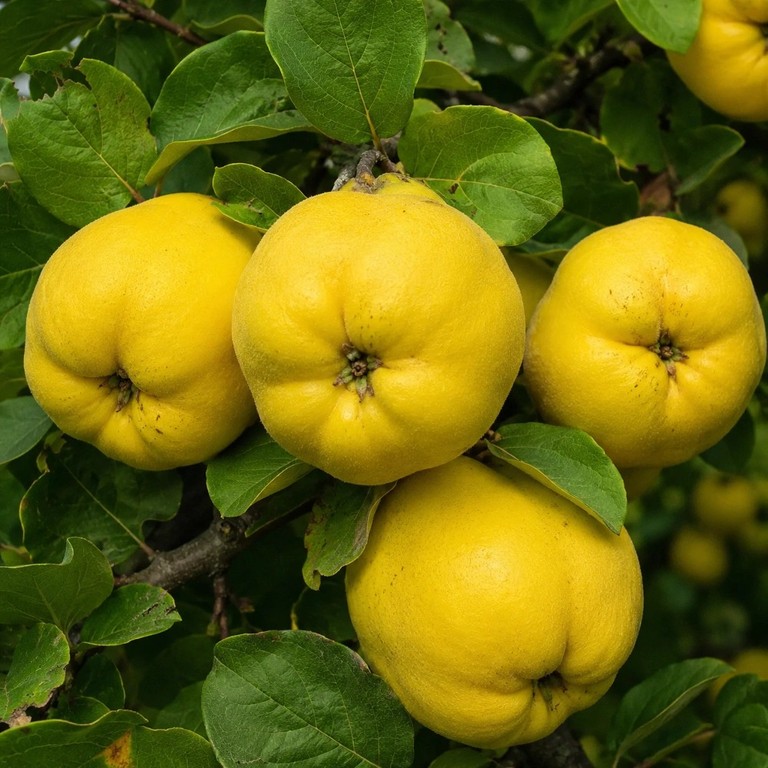
It also brings with it familiar scents capable of awakening memories we thought we had forgotten. Among them, the unmistakable fragrance of quinces holds a special place, evoking childhood and the simple atmosphere of times gone by.
Golden-yellow, fragrant and slightly rough to the touch, quinces were once a familiar presence in many homes, especially during the autumn months. They were placed in a bowl, on a cupboard or in the pantry, where their intense aroma would gradually spread throughout the house.
As children, we did not always find quinces easy to eat raw. Their firm flesh and distinctive, slightly tart and astringent taste made them very different from other fruits. Yet that was perhaps part of their charm. They were often sliced and enjoyed with a little sugar, or baked in the oven until they became soft, sweet and wonderfully fragrant.
The arrival of quinces also marked one of the traditional rituals of autumn: preparing preserves for the winter. In kitchens of the past, quinces were turned into jams, compotes, jellies and quince paste, carefully stored away for the colder months. The aroma of cooking fruit would fill the kitchen, becoming part of the season itself.
Today, almost every kind of fruit is available throughout the year. Supermarket shelves are filled with produce from different parts of the world, and the connection between food and the seasons is not always as strong as it once was. Yet some flavours remain closely tied to a particular time of year.
Quinces are one of them.
Their scent can bring back memories of a countryside kitchen, a grandmother preparing preserves, a family gathered around the table or an autumn afternoon spent playing while fallen leaves slowly covered the garden.
These are simple memories, often connected to everyday moments that may now seem very distant. Perhaps that is precisely what makes quinces so special. They are not an extravagant fruit, nor do they have the flawless appearance of many modern varieties. What they have instead is character, an unmistakable fragrance and the ability to evoke an entire season — and sometimes a very personal chapter of our lives.
Autumn itself seems to encourage nostalgia. Cooler temperatures, softer light and changing colours invite us to slow down and remember the small traditions that once shaped our days.
In that sense, a single quince sitting on a kitchen table can become much more than a piece of fruit. It can be a reminder of a simpler time, when the seasons felt more distinct and family moments seemed to carry a different kind of importance.
Its fragrance cannot turn back time, but it can bring forgotten images and emotions to the surface for a few precious moments.
That is why, when autumn returns, quinces continue to represent much more than a seasonal fruit. They are the scent of old-fashioned kitchens, homemade preserves, family homes, grandparents’ houses and a childhood that belongs to the past, yet can still return through something as simple as a familiar aroma.
The quince is, in many ways, one of the most authentic scents of autumn. And for those who grew up with it, it is also the fragrance of a time that will never return, but will always remain somewhere in memory.





 International editions: