


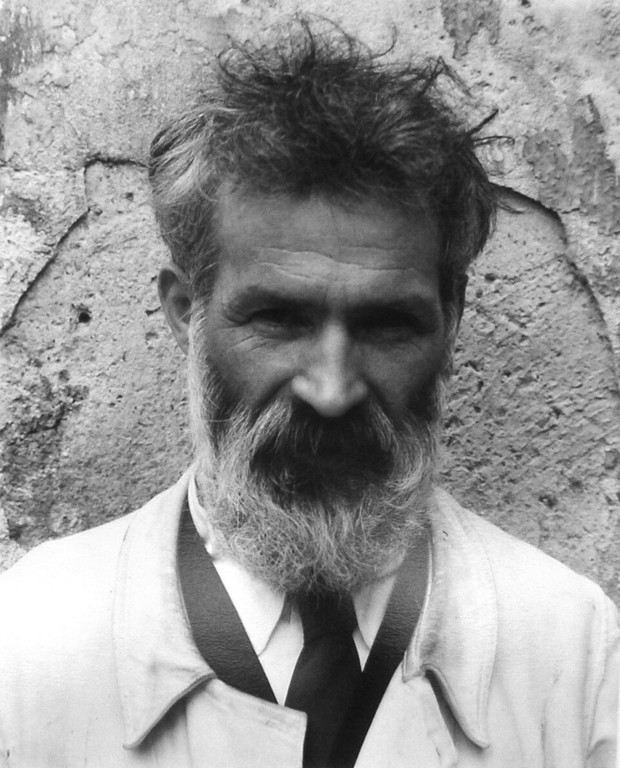
Constantin Brâncuși, born on 19 February 1876 in the village of Hobița, Gorj County, Romania, is regarded as one of the most influential sculptors of the 20th century and a major figure in the development of modern art. Through his innovative approach, the Romanian artist transformed the way sculpture could represent reality, moving away from realistic depictions towards simplified forms with profound symbolic meaning.
After studying at the School of Arts and Crafts in Craiova and the National School of Fine Arts in Bucharest, Brâncuși arrived in Paris in 1904, where he developed his distinctive artistic language. His encounter with the European avant-garde and his brief experience working in Auguste Rodin’s studio contributed to his artistic development. However, Brâncuși chose to pursue an independent path, focusing on the essential qualities of form and the deeper meaning of his subjects.
His work is characterised by simplicity, balance and a careful exploration of materials. Sculptures such as The Kiss, Sleeping Muse and Bird in Space illustrate his pursuit of essential forms. Rather than reproducing anatomical details or the external appearance of his subjects, Brâncuși sought to express ideas, emotions and sensations through carefully shaped volumes.
One of his most important contributions to Romania’s cultural heritage is the Path of Heroes monumental ensemble in Târgu Jiu, created in memory of the Romanian soldiers who died in the First World War. The ensemble comprises the Table of Silence, the Gate of the Kiss and the Endless Column. Together, these works form a symbolic artistic journey and represent an outstanding expression of Brâncuși’s vision.
Through this monumental project, the sculptor demonstrated that art could extend beyond individual objects and transform an entire space into a unified composition. The Endless Column, composed of repeating geometric modules, has become one of his most recognisable works and a symbol of the aspiration towards infinity.
Internationally recognised for his contribution to modern sculpture, Brâncuși influenced generations of artists and opened new perspectives on the relationship between form, material and meaning. He died in Paris on 16 March 1957, leaving behind an artistic legacy that continues to be studied and admired around the world.
Constantin Brâncuși’s legacy remains a landmark of both Romanian and international culture. By transforming simple forms into complex artistic expressions, he demonstrated that modernity does not necessarily mean abandoning tradition, but rather discovering new ways of interpreting the world.




 International editions: