


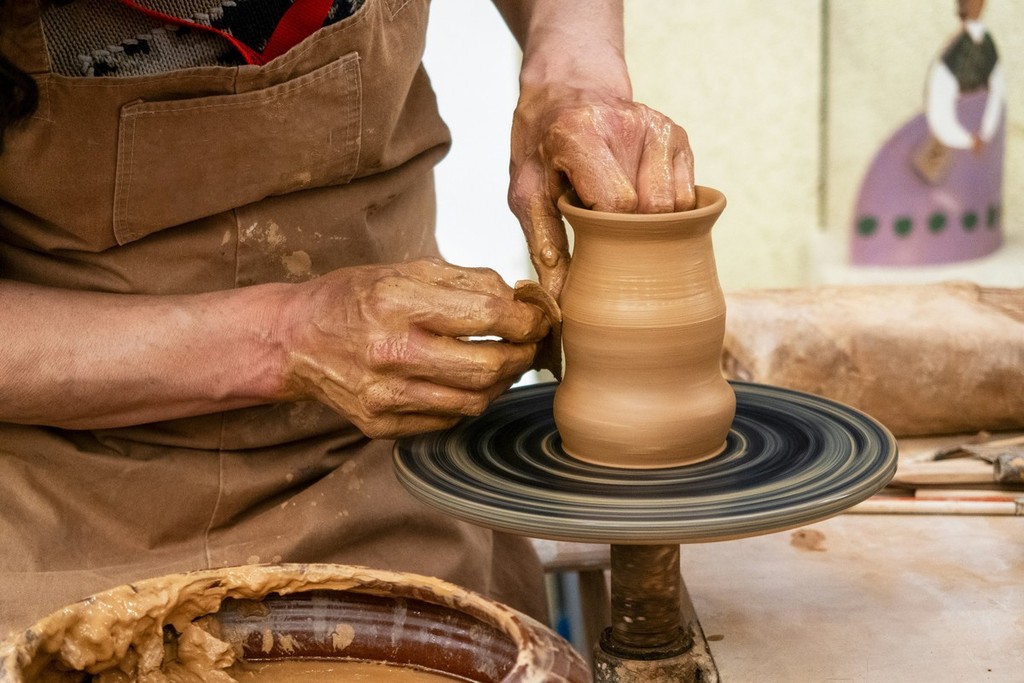
In many rural communities, skilled artisans continue to use techniques that have remained virtually unchanged for centuries, creating objects that combine functionality with artistic value. From pottery and carpet weaving to wood carving and icon painting, these traditional crafts are an essential part of Romania's cultural heritage and continue to attract visitors from around the world.
Pottery – the art of shaping clay
Pottery is one of the oldest crafts practiced in Romania, with a history dating back more than 6,000 years to the Cucuteni civilization. Since ancient times, clay has been shaped into cooking pots, storage vessels, jugs, bowls, and ceremonial objects.
Today, Romanian potters still use the traditional potter's wheel to create a wide variety of handmade ceramics. Each piece is carefully shaped, dried, decorated by hand, and fired in traditional kilns.
Among Romania's best-known pottery centers are Horezu (Vâlcea County), Corund (Harghita County), Marginea (Suceava County), Oboga (Olt County), and Vlădești. Horezu pottery, recognized by UNESCO as Intangible Cultural Heritage, is famous for its distinctive decorative motifs, particularly the iconic Horezu rooster. Marginea pottery is equally remarkable for its characteristic black color, obtained through a traditional oxygen-free firing technique.
Traditional carpet weaving
Carpet weaving is one of Romania's most treasured traditional crafts and continues to be practiced in many villages across Oltenia, Moldavia, Maramureș, and Transylvania. Using traditional wooden looms, artisans weave carpets from wool, cotton, or hemp, decorating them with geometric, floral, and symbolic patterns unique to each region.
In the past, almost every household produced its own carpets, which were considered essential elements of home decoration and an important part of a bride's dowry. Creating a single carpet often required weeks or even months of meticulous work.
Traditionally, the yarn was dyed using natural pigments extracted from plants, tree bark, roots, leaves, berries, and minerals. Today, Romanian handmade carpets are highly valued for their authenticity, craftsmanship, and timeless beauty, attracting collectors and interior design enthusiasts alike.
Traditional costume weaving
Another craft that continues to thrive is the weaving and embroidery of traditional Romanian clothing. In many rural areas, artisans still weave fabric from hemp, flax, or cotton before transforming it into embroidered blouses, skirts, aprons, towels, and ceremonial garments.
The Romanian blouse, known as the "ie," has become one of the country's best-known cultural symbols. Its intricate embroidery varies from region to region, with many motifs symbolizing protection, fertility, prosperity, or spiritual beliefs.
Wood carving
Romania's vast forests have supported a rich tradition of wood carving for centuries. Master craftsmen, particularly in Maramureș, are renowned for creating monumental wooden gates decorated with twisted rope patterns, sun symbols, the Tree of Life, and other traditional motifs.
Wood is also used to create traditional furniture, dowry chests, household utensils, crosses, roadside shrines, masks, and churches. Romania's wooden churches are internationally recognized masterpieces of traditional architecture.
Egg decorating
Egg decorating is one of Romania's most spectacular Easter traditions, especially in Bucovina and other parts of Moldavia. Using beeswax and a traditional writing tool known as a "chișiță," artisans create highly detailed geometric, floral, and religious motifs before immersing the eggs in successive dye baths.
Each decorative symbol carries its own meaning, representing life, fertility, faith, protection, or the renewal of nature. Romanian decorated eggs are admired worldwide as unique works of folk art.
Icon painting
Painting religious icons on wood and glass remains an important artistic tradition in regions such as Transylvania and Bucovina. Centers including Nicula, Șcheii Brașovului, and Mărginimea Sibiului are renowned for preserving centuries-old icon-painting techniques.
Glass icons, which first appeared in Transylvania during the eighteenth century, are considered one of Romania's most distinctive forms of folk art.
Blacksmithing
Traditional blacksmiths continue to forge agricultural tools, gates, fences, hinges, horseshoes, and decorative wrought-iron objects by hand. Although the number of workshops has declined, blacksmithing remains a respected craft admired for its precision, durability, and artistic quality.
Sheepskin craftsmanship and leatherworking
Traditional craftsmen continue to produce sheepskin coats, embroidered vests, belts, and various leather goods using techniques inherited from previous generations. Many of these garments are decorated with colorful embroidery and regional patterns, making each piece unique.
Basket weaving
Basket weaving using willow, hazel branches, or bulrush remains an important traditional craft in the Danube Delta, Maramureș, and Transylvania. Artisans create baskets, furniture, mats, hats, and a variety of household items that combine practicality with natural beauty.
Traditional musical instrument making
In Bucovina, Maramureș, and Transylvania, skilled craftsmen still build traditional musical instruments such as the pan flute, shepherd's flute, caval, cobza, violin, and tulnic. Every instrument is handcrafted from carefully selected wood and individually tuned, a process that requires considerable expertise and patience.
Traditional mask making
In northern Moldavia and Bucovina, artisans continue to produce traditional masks used during winter folk festivals. Made from wood, fur, leather, horns, and textiles, these masks represent mythical characters and animals such as the Bear, the Goat, and the Stag, playing an essential role in seasonal customs.
Wool processing
The traditional processing of wool begins with sheep shearing and continues through washing, carding, spinning, dyeing, and weaving. Wool is transformed into blankets, rugs, carpets, clothing, and decorative textiles valued for their warmth, durability, and natural qualities.
Preserving traditional crafts
Ethnographic museums, cultural centers, artisan workshops, and traditional craft fairs play an essential role in preserving Romania's craft heritage. Increasing numbers of visitors choose to participate in pottery, weaving, wood carving, or egg-decorating workshops, gaining first-hand experience of these centuries-old traditions.
A living cultural heritage
Romania's traditional crafts are far more than simple occupations. They represent the country's history, creativity, and cultural identity, preserving knowledge that has been passed down through generations. Every handmade object tells a story about the people who created it, the communities they belong to, and the traditions they continue to protect. By supporting local artisans and promoting authentic craftsmanship, Romania safeguards a priceless cultural heritage while ensuring that these remarkable traditions continue to inspire future generations.




 International editions: