


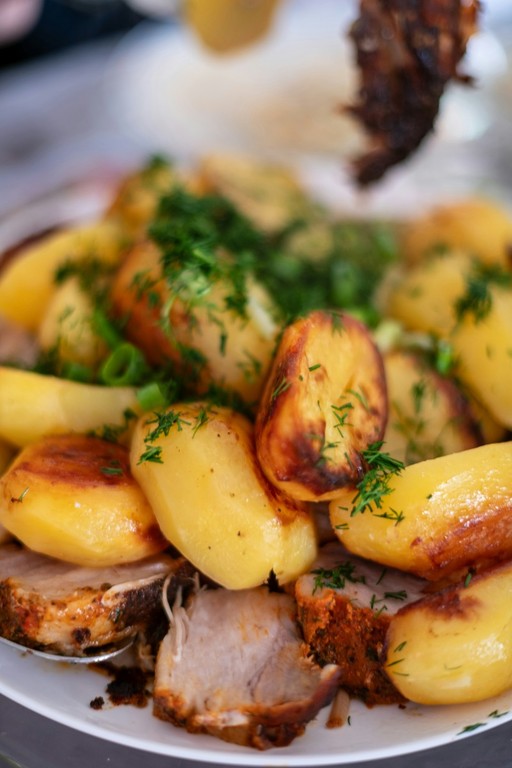
Located in the western part of the country, the region has been shaped over centuries by the meeting of communities with different languages, religions, traditions and customs. Romanians, Germans, Hungarians, Serbs and other communities have all contributed to the development of a complex local identity, and this diversity can also be found in the region’s cuisine.
Banat cuisine cannot be reduced to a handful of traditional dishes. It is the result of a long history in which recipes, ingredients and cooking techniques circulated between communities, were adapted to local circumstances and passed down from one generation to another.
Today, the cuisine of Banat can be regarded as an important part of the region’s cultural heritage and as a way of understanding its multicultural history.
A region where cultures met
Banat’s geographical position encouraged the movement of people, goods and ideas throughout history. The region was influenced by different cultural and political spaces, while its towns and villages became places where culinary traditions came into contact with one another.
This diversity is visible in local cuisine. Romanian dishes coexist with Central European, Austro-German, Hungarian and Serbian influences, while in many households recipes were adapted according to locally available ingredients and family traditions.
In Banat, the table has traditionally been more than simply a place to eat. It has been a space for gathering, hospitality and the transmission of traditions.
Romanian influence: the flavours of the traditional household
The Romanian component of Banat cuisine is closely connected with rural cooking and the use of locally available ingredients.
Seasonal vegetables, meat, dairy products, cereals and foods produced within the household formed the basis of many traditional dishes. Soups, stews, meat dishes, stuffed cabbage rolls, polenta and various homemade products are all part of the culinary repertoire found throughout the region.
At the same time, Romanian cuisine in Banat developed in constant contact with other local culinary traditions. This helps explain why some dishes and cooking methods can have different versions from one community to another.
German influence: Central European traditions and homemade pastries
German communities, particularly the Banat Swabians, made an important contribution to the cultural and culinary development of the region.
Central European influences can be seen especially in pastry-making, dough-based dishes, desserts and certain cooking techniques.
Homemade cakes, sweet breads, pies, yeast-based pastries and other desserts occupied an important place in the culinary traditions of German communities.
Over time, however, many recipes crossed community boundaries. A dish associated with one particular tradition could be adopted, adapted and passed on by other families.
German influence should therefore not be viewed simply as a separate category, but as one of the components of a shared culinary heritage.
Hungarian influence: paprika, goulash and hearty dishes
Hungarian influence is one of the most visible components of Banat’s culinary heritage.
Paprika, stews and hearty meat dishes contributed to the region’s characteristic flavours. Goulash, in its various forms, is one of the dishes associated with Central European cuisine and can also be found in Banat.
Hungarian cuisine also contributed to the popularity of various dough-based dishes and to the development of pastry and confectionery traditions.
In Banat, these influences did not remain isolated. They came into contact with local ingredients and cooking techniques, creating regional dishes and variations that have become part of the area’s culinary identity.
Serbian influence: meat, vegetables and family traditions
The Serbian community represents another important component of Banat’s multicultural identity.
Serbian culinary influences can be found particularly in meat and vegetable dishes, as well as in various pastries and foods prepared for religious and family celebrations.
In areas where Romanian and Serbian communities lived side by side for generations, culinary exchange was a natural part of everyday life. Recipes moved from one household to another, and certain dishes developed distinctly local versions.
This culinary proximity reflects a broader reality of Banat: its cultures did not always exist separately, but frequently met in everyday life.
Markets and households: places where culinary traditions developed
Understanding Banat cuisine also means looking at how people traditionally produced and obtained their food.
Local markets historically served as important meeting places for producers, traders and consumers. Vegetables, fruit, cheese, meat, bakery products and other foods moved between villages and towns, while trade helped spread ingredients and culinary habits.
In rural areas, the household remained a centre of food production. Preserving vegetables, preparing meat products, baking bread and pastries and maintaining family recipes all contributed to the transmission of culinary heritage.
Celebrations and culinary traditions
In Banat, cuisine is also closely connected with the calendar of celebrations.
Christmas, Easter, weddings, family gatherings and other community events traditionally provided occasions when larger quantities of food were prepared and dishes were often different from those served during ordinary meals.
Each community maintained its own customs, but close contact between people also meant that certain dishes and culinary practices moved from one tradition to another.
Celebration recipes therefore have a significance that goes beyond food. They preserve the memory of families and communities and transmit stories about places of origin and the people who prepared them.
Banat and the tradition of homemade products
One of the important characteristics of traditional Banat cuisine is its connection with homemade food.
Bread, meat products, preserves, pickles, jams, dairy products and homemade desserts are examples of a traditional food economy based on the use of locally available resources.
Today, at a time when consumers are increasingly interested in local products and in knowing where their food comes from, this tradition can become an important resource for gastronomic tourism and for promoting local producers.
Cuisine as cultural heritage
Cuisine is not only about recipes. Behind every dish there are cooking techniques, ingredients, customs, family stories and ways of passing knowledge from one generation to another.
In Banat, cuisine has an additional value because it reflects the multicultural character of the region.
A traditional meal can bring together elements originating from several cultural traditions without necessarily losing their individual identities. It is precisely this combination that makes Banat cuisine particularly interesting for visitors.
For international travellers, discovering a region through its food can be a way of gaining a deeper understanding of its history and local communities.
Timișoara: cuisine in a multicultural city
Timișoara represents one of the clearest urban expressions of Banat’s multicultural character.
The history of the city is closely connected with the coexistence of different communities, and this diversity is also reflected in its culinary culture.
Today, restaurants, markets, bakeries, pastry shops and local producers can contribute to rediscovering the culinary traditions of the region.
For visitors, a trip to Timișoara can therefore include not only architecture, museums and cultural events, but also an exploration of local gastronomy.
From heritage to gastronomic tourism
Multicultural cuisine can represent an important resource for the development of tourism in Banat.
Travellers are increasingly interested in authentic experiences: visits to local producers, traditional markets, culinary workshops, tastings, food festivals and meals prepared according to local recipes.
For Banat, such a model can highlight precisely the diversity of the region. A gastronomic route could showcase Romanian, German, Hungarian and Serbian traditions while also presenting the history of the communities that preserved them.
Cuisine can thus become a form of cultural and tourism promotion, as well as a way of supporting local producers.
Preserving recipes for future generations
One of the challenges facing culinary heritage is passing it on to younger generations.
Many traditional recipes have been preserved within families and transmitted orally. As lifestyles change, some of this knowledge risks disappearing.
Documenting recipes, organising culinary events, supporting traditional producers, promoting local products and incorporating regional gastronomy into educational projects can help preserve this heritage.
In this context, every family that preserves a traditional recipe and passes it on contributes, in its own way, to safeguarding Banat’s cultural identity.
A cuisine that tells the story of a region
Banat cuisine is the result of a history in which people travelled, settled, worked together and lived alongside one another.
Romanian, German, Hungarian and Serbian influences should not be regarded as completely separate chapters, but as components of a regional culture that developed over time.
In everyday dishes, festive meals, homemade products and family recipes, the memory of a region can be found — a region where diversity has become part of its identity.
For those discovering Banat, cuisine can be much more than a culinary experience. It can be a journey through the region’s history, the traditions of its communities and the ways in which different cultures lived alongside one another and influenced each other.
Banat can be discovered through its cities, architecture, villages and landscapes, but also through a meal around which Romanian, German, Hungarian and Serbian traditions come together within a single region.




 International editions: