


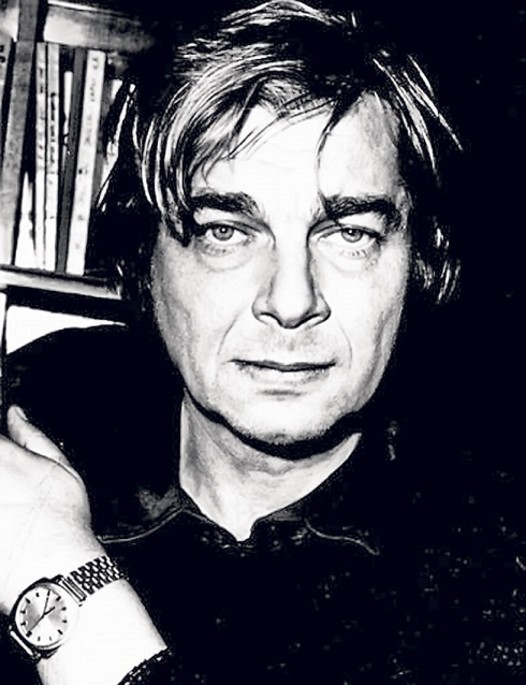
His work continues to influence generations of writers, critics, and readers, both in Romania and abroad. In 1975, he received the prestigious Herder Prize, and a few years later, in 1980, he was nominated for the Nobel Prize in Literature.
Born on March 31, 1933, in Ploiești, in the Prahova region, Nichita came from a family with multicultural roots: his father was Romanian, while his mother, Tatiana Cereaciuchin, was of Russian origin. This dual cultural heritage contributed to shaping his artistic sensitivity and poetic vision. He studied philology at the University of Bucharest, where he began developing the lyrical language that would later make him famous.
From the very beginning of his career, Stănescu established himself as a completely new voice in Romanian literature. His poetry did not follow traditional conventions but explored complex themes such as time, love, the human condition, language, and the relationship between man and the universe. Among his most important works are O viziune a sentimentelor, Necuvintele, and Epica Magna, volumes that redefined modern Romanian poetry.
His private life was intense and often tumultuous. He married three times and experienced passionate relationships that deeply influenced his writing. His marriage to the poet Doina Ciurea coincided with one of the most productive periods of his artistic career. Personal experiences, passions, and emotional vulnerabilities are constantly reflected in his verses, making his poetry authentic and profoundly human.
Contrary to the classic image of the isolated and melancholic poet, Nichita Stănescu was known for his expansive and charismatic personality. He loved surrounding himself with friends, artists, and intellectuals, often turning everyday gatherings into moments of spontaneous creation. Many witnesses recalled that he was capable of improvising extraordinary poems during simple conversations, with a natural ease that left everyone speechless.
Alongside his creative genius, however, there was also a personal fragility. Alcohol addiction seriously affected his health during the final years of his life. Despite various treatment attempts and several hospitalizations, his condition progressively worsened. He died on December 13, 1983, in Bucharest, at only 50 years old, leaving an enormous void in Romanian culture.
Today, Nichita Stănescu is regarded as a symbol of modern Romanian poetry. His works are studied in schools and universities, translated into numerous languages, and celebrated through literary festivals, cultural events, and new critical editions. His poetry continues to move readers thanks to its extraordinary ability to transform words into images, ideas, and universal emotions.
More than simply a poet, Nichita Stănescu remains one of the most important cultural figures of contemporary Romania: an innovator of language and an author who succeeded in giving a new dimension to 20th-century European poetry.




 International editions: